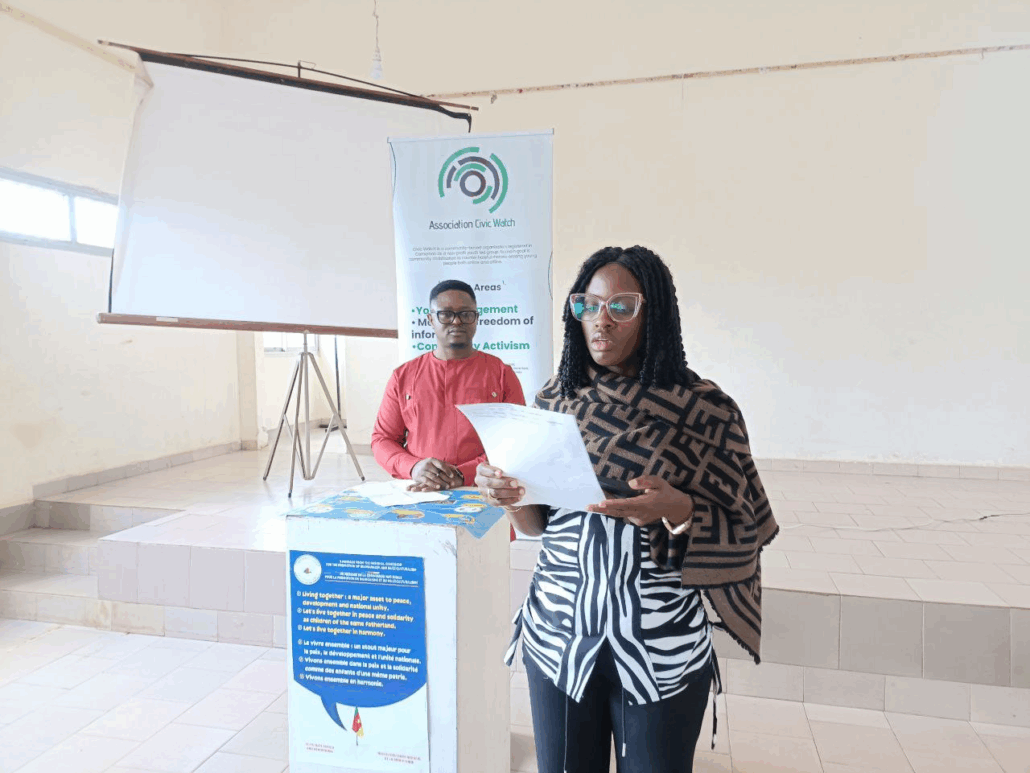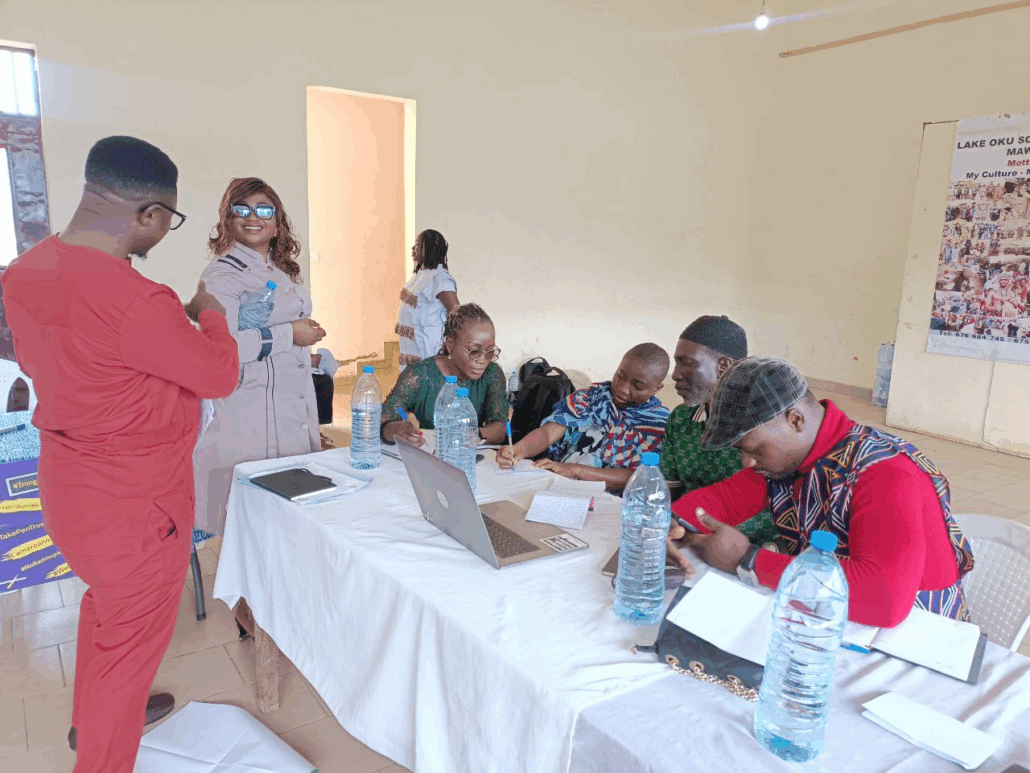

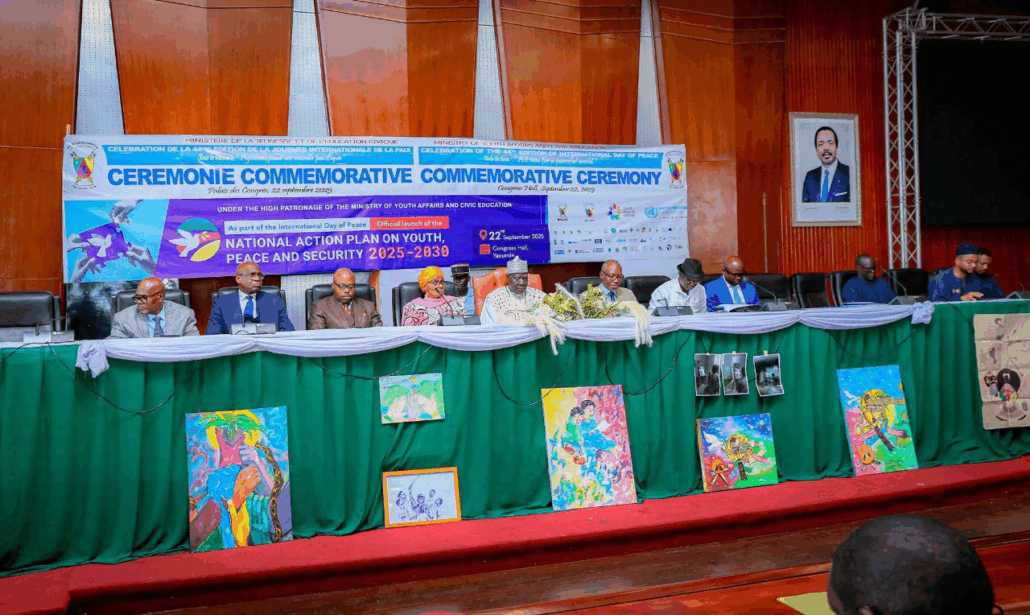
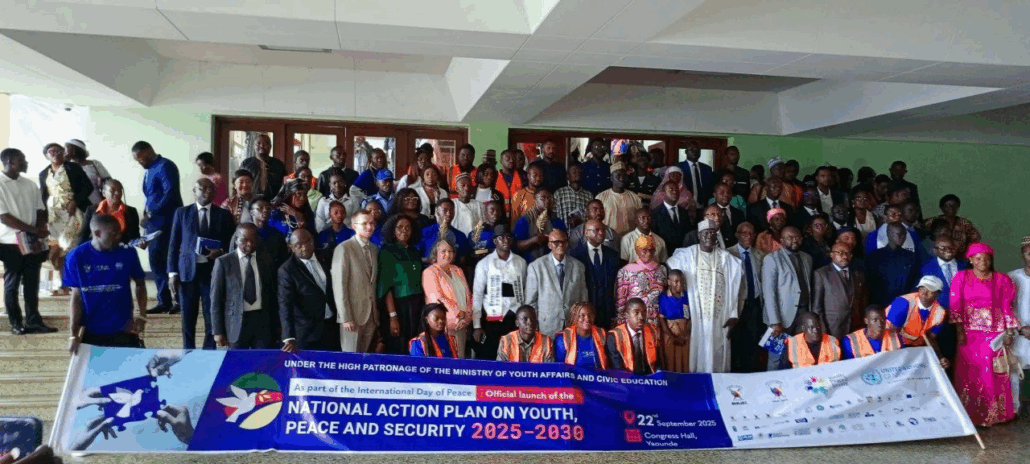
On September 22, 2025, Cameroon unveiled its National Action Plan (NAP) on Youth, Peace, and Security (YPS) 2025-2030. Resulting from wide-ranging consultation and active participation, the NAP on Youth, Peace and Security represents a concrete and innovative response aimed at fostering the active involvement of young people, youth organizations, and youth movements in conflict prevention and the sustainable consolidation of peace in Cameroon.
This strategic instrument, in line with United Nations Security Council Resolution 2250 and the Continental Framework on Youth, Peace and Security, reflects Cameroon’s commitment to granting its youth a central role in conflict management, promoting positive transformation, and fostering inclusive and lasting peace.
Cameroon, with a predominantly young population (65% under the age of 35), is positioning itself as a regional leader in Central Africa by recognizing the strategic role of its youth in building peace. The(NAP-YPS) 2025-2030 is the first of its kind in the CEMAC sub-region, and it is built upon the international frameworks of the United Nations (Resolutions 2250, 2419, 2535) and the African Union (Continental Framework on Youth, Peace, and Security). Cameroon’s National Action Plan on Youth, Peace, and Security (2025-2030) is a significant step towards inclusive peacebuilding, aligning with the United Nations Security Council Resolutions 2250, 2419, 2535, and the African Union’s Continental Framework on YPS. This strategic effort recognizes that, with 65% of the population under 35, Cameroon’s youth are not only beneficiaries of peace, but also key actors in creating an inclusive, sustainable peace.
This Action Plan addresses the challenges that weaken young men and women, who are often victims of a violent system. Cameroon faces multiple crises: Boko Haram, the crisis in the North-West and South-West regions, and inter-community tensions. These situations have a direct impact on the youth, who face unemployment, insecurity, inequality, and violence, including gender-based violence. The (NAP-YPS) aims to transform this reality to reinforce the contribution of young people to the creation of a just and peaceful society. This plan is therefore the result of a vast participatory process that has consulted more than 4,500 young people, civil society organizations, and community leaders since 2017.
This National Action Plan targets Cameroon’s wide range of problems, including the Boko Haram insurgency, the Anglophone conflict, refugee influx, and inter-communal conflicts, which adversely affect young people through unemployment, insecurity, inequality, and gender-based violence. Youth, who are frequently caught up in these violent spaces, are critical to transforming this situation. Since 2017, the Plan has been developed through an extensive participatory process that has involved over 4,500 young people and partners. Its goal is to turn youth from victims of a violent system into empowered contributors to a just, inclusive, and peaceful society. It promotes youth participation, protection, prevention, partnerships, and reintegration, which is consistent with the African Union’s Continental Framework on Youth, Peace, and Security.
Since 2020, Civic Watch has played a frontline role in conflict-affected zones by countering hate speech, preventing online and offline incitement to violence and violent extremism, and combating misinformation. Under the leadership of Ngala Desmond Ngala, who has been instrumental in contextualising prevention mechanisms and promoting bottom-up approaches to policy change, Civic Watch has emerged as a catalyst for inclusive peacebuilding in Cameroon. Through his guidance, the organization translates grassroots insights into actionable policy recommendations that reflect community realities.
Civic Watch has been a frontline actor in Cameroon’s conflict zones since 2020, putting the Youth, Peace, and Security (YPS) agenda into action through targeted interventions. These interventions combat hate speech, misinformation, and disinformation, and prevent incitement to violence and violent extremism. The organization’s unique strength lies in its community mobilization efforts that engage young people in dialogue, tolerance, and peacebuilding. Believing firmly in the transformative power of youth, Civic Watch serves as a platform to ensure that youth voices have a meaningful influence on peace processes. Civic Watch’s specialized programs and campaigns are useful instruments that directly enhance the five pillars of the YPS agenda:
Participation: Recognizing youth as critical agents of change, Civic Watch empowers young people by ensuring their voices are included in peace processes. The organization offers training in non-violent conflict resolution and equips young people with leadership skills, enabling them to engage actively and meaningfully in peacebuilding efforts. This emphasis on youth participation enhances the inclusiveness and sustainability of peace initiatives. This pillar emphasizes the meaningful involvement of young people in peace processes, ensuring their voices are included in the design and implementation of peace initiatives. Civic Watch’s role as a platform for youth inclusion, advocacy for government commitments to rebuild young people’s trust, and efforts to address challenges faced by women and girls in accessing public spaces all highlight empowerment and active participation. Programs such as PeaceWavers create networks of young peace ambassadors who foster inclusive dialogue and mutual understanding across communities, ensuring youth voices shape peace processes. Civic Watch also empowers young people with leadership skills and advocates for their inclusion in decision-making spaces.
Prevention: Through its youth engagement pillar, Civic Watch has been at the forefront of educating communities on conflict resolution and the dangers of hate speech, and by monitoring discourse, Civic Watch helps create peaceful environments. Programs designed by Civic Watch such as #Act4Peace and #PenNotGun promotes education and non-violence, directly tackling the root causes of conflict. Early warning and early response monitoring further enable timely interventions to prevent escalation.
Protection: Civic Watch contributes to the protection of communities by mitigating the spread of hate speech and xenophobia, factors that often exacerbate violence and insecurity. The #Media4Peace and the Africa Fact-Checking Fellowship (AFFC) program to combat misinformation, disinformation, and hate speech, which are frequent triggers of conflict as well as protecting vulnerable and less connected communities from misinformation while promoting information integrity. By raising awareness about the dangers of inflammatory rhetoric, Civic Watch helps to safeguard vulnerable populations and reduce violence.
Through rigorous fact-checking and raising awareness on the harmful effects of inflammatory rhetoric, the association works to safeguard vulnerable populations from divisive and harmful influences. Their community monitoring and early warning activities further help to de-escalate tensions in crisis-prone zones, protecting citizens from potential violence and instability.
Partnership
Believing in the power of collaboration to achieve common goals, Civic Watch works closely with government bodies such as MINJEC, the Bilingualism Commission, and youth councils, as well as with community and religious leaders. Alongside international partners like UNESCO MGIEP, these partnerships strengthen coordinated peacebuilding efforts and maximize resource sharing. By networking with community-based and youth-led groups, especially in conflict-affected regions like the North West and South West of Cameroon, Civic Watch fosters inclusive peace strategies that are community-driven and contextually relevant. These collaborative efforts enable broader outreach, resource mobilization, and unified responses to peace and security challenges across the country.
Cameroon, as an integral member of the International Community and the United Nations, recognizes the importance of not only adopting but also fully domesticating the principles of the Youth, Peace, and Security (YPS) agenda through a National Action Plan (NAP). This NAP serves as a practical guide for Cameroonian youth, government, civil society, international partners, and all stakeholders to collaborate in creating inclusive policies that ensure the protection, participation, and empowerment of youth in peace and security.
Civic Watch Association stands as a pillar of hope and practical action within Cameroon’s NAP on Youth, Peace, and Security. Through innovative programs, dedicated community engagement, and strategic partnerships, Civic Watch addresses immediate peace and security challenges while fostering long-term resilience and inclusive governance. Their work exemplifies the vital role of youth-led organizations in building a peaceful, just, and inclusive Cameroon for future generations. By preventing conflict through education and monitoring, promoting youth participation, protecting communities from incitement, and building strong networks for collective action, Civic Watch substantially advances the nation’s YPS agenda. Their holistic approach not only meets urgent peace needs but also invests in sustainable community resilience and governance.
By Nadine Bindey-EWER monitor
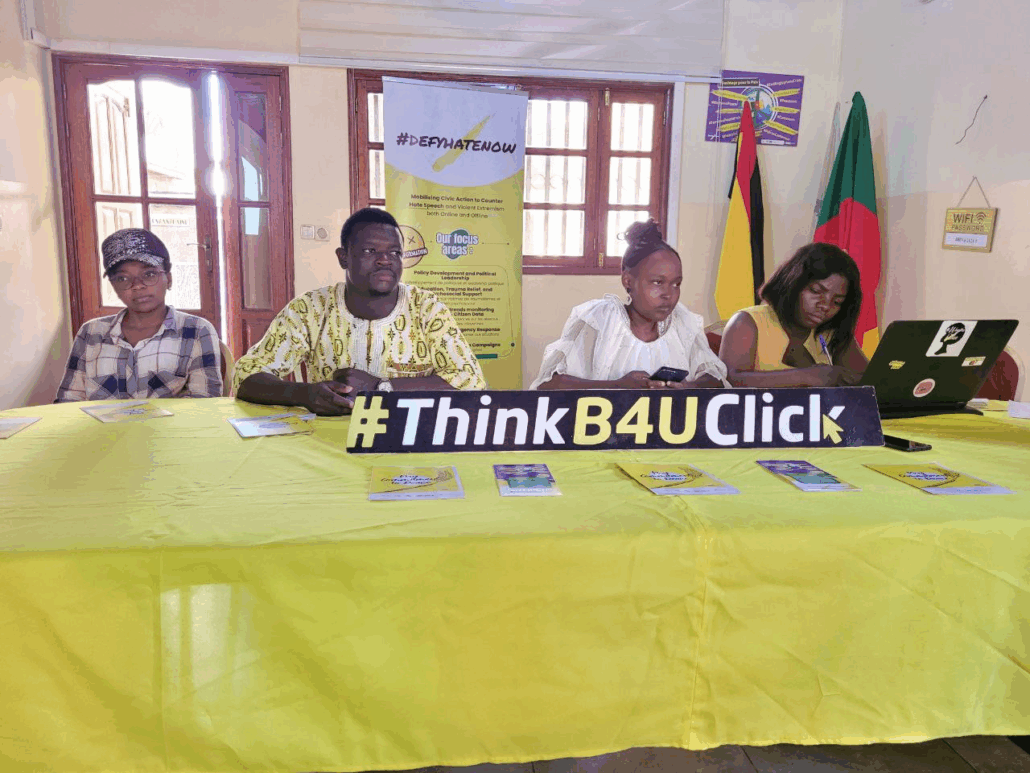
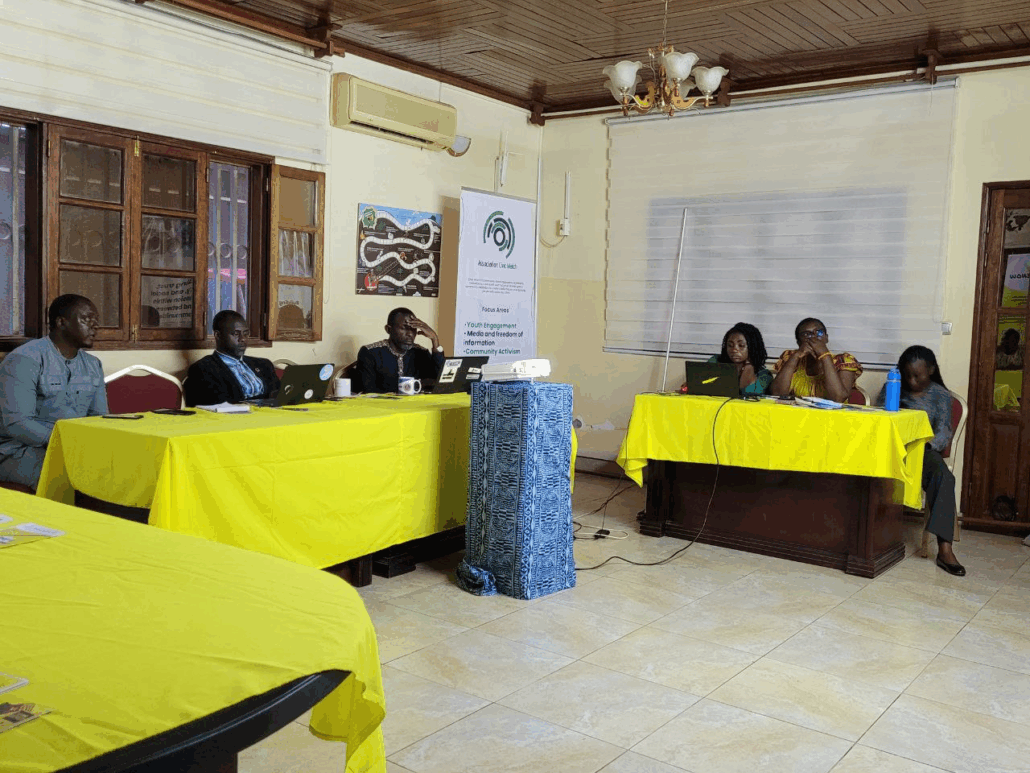
In the tense run-up to Cameroon’s 2025 presidential elections, marked by rising political polarization and a worrying surge in hate speech and disinformation, Civic Watch has emerged as a pivotal force. Since May 2025, Civic Watch has been spearheading a series of multi-stakeholder consultation meetings to foster collaboration among civil society organizations, the media, government agencies, and community leaders in addressing the toxic narratives that threaten Cameroon’s fragile peace and democratic integrity.
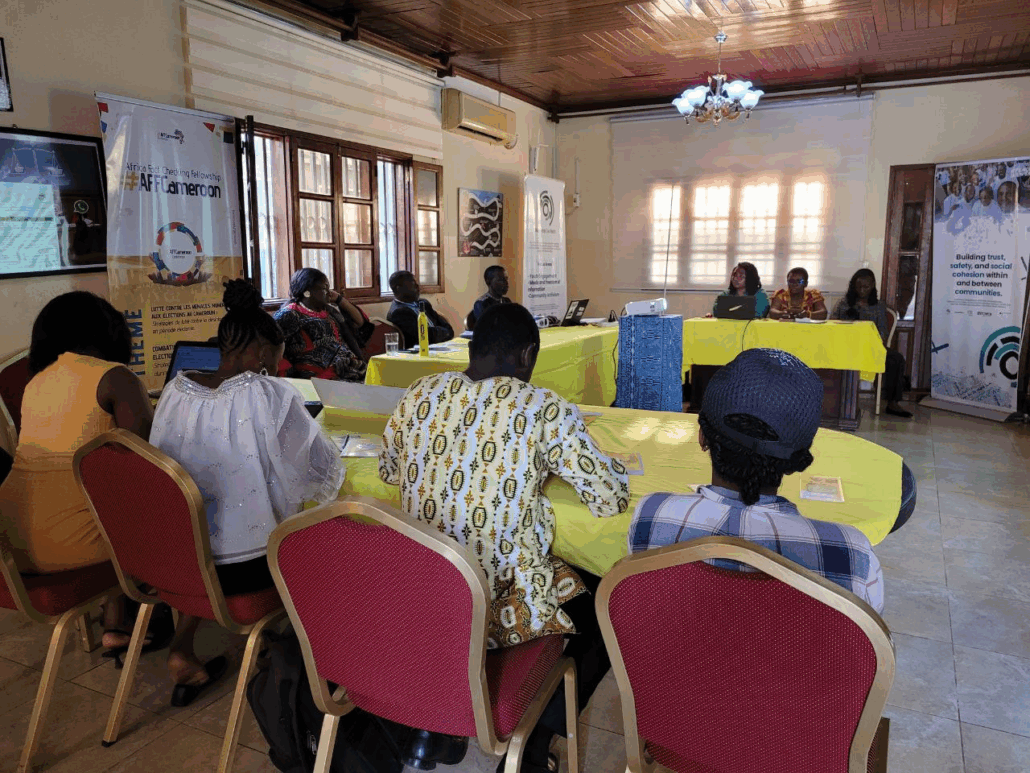
The coalition’s latest meeting on September 23, 2025, brought together diverse actors, including representatives from political organizations, youth groups, the Ministry of Communication, and media watchdogs. It provided a vital platform for sharing insights on the prevalence of hateful and false narratives spreading across social media and traditional outlets. This meeting also reviewed efforts by coalition members to raise awareness, counter misinformation, and promote critical media literacy, especially targeting young people, who are both victims and vectors of misinformation.
Stakeholders have been highlighting the serious consequences of hate speech and disinformation on national unity and electoral trust. The open letter from the coalition, addressed to political parties, media, ELECAM, public authorities, civil society, and all citizens, strongly condemns these damaging behaviors. It emphasizes that hate speech is more than careless words; it deepens historical wounds, stirs division, and erodes trust vital for peaceful coexistence. Disinformation, propagated by some media professionals and political figures seeking sensationalism, manipulates public opinion and undermines democratic processes.
The letter calls on every stakeholder, political parties, to reject divisive rhetoric; the media to uphold strict ethical standards and rigorous fact-checking; election management bodies to safeguard impartiality; public authorities to ensure security and fair access to information; and civil society and citizens to remain vigilant against falsehoods and hateful content. The coalition urges collective responsibility, reminding all that the legacy we leave depends on the actions or silences of today.
Political parties hold a unique responsibility in shaping Cameroon’s electoral climate. The coalition urges them to reject manipulative tactics that exploit ethnic, religious, or social divisions. All communications must be grounded in transparency and sincerity, focusing on policy solutions rather than fear-mongering. Parties are also encouraged to guide their supporters toward respect and civility in public forums and online spaces to prevent polarization.
Professional journalism is a bulwark against misinformation. The coalition calls on media outlets to rigorously fact-check and select voices that promote informed discourse over division. Ethical reporting can counter sensationalism, reducing hate speech’s amplification and fostering social cohesion. Media professionals are reminded that their work impacts national stability and that adherence to truth is critical in this pivotal period.
Bodies like ELECAM are tasked with ensuring elections are free, fair, and inclusive. The coalition emphasizes impartiality and equal enforcement of rules to maintain public confidence. Monitoring and regulating misinformation that compromises transparency is essential to protect the vote’s legitimacy and the people’s trust.
Government actors are called to prioritize the public interest above partisan concerns. Ensuring security, safeguarding access to accurate information, and fostering tolerance and dialogue are key to maintaining peace. The National Communication Council, in particular, must enact its regulatory role forcefully and impartially to swiftly address professional misconduct that undermines electoral integrity.
Civic organizations continue to play a frontline role by monitoring, reporting, and educating on misinformation. Initiatives like 237 Check’s WhatsApp verification platform empower citizens to question and verify information before sharing. The coalition appeals to all Cameroonians, including diaspora communities, to adopt critical and responsible attitudes, rejecting hateful content even when aligned to their beliefs.
Despite challenges, coalition members have launched impactful initiatives, including digital campaigns to flag hateful content, school sensitization programs fostering media literacy, and citizen networks reporting misinformation in real-time. However, issues like coordination, recognition, and sustainable funding persist as barriers.
Civic Watch and its partners embody how collective civil society can uphold democracy and social unity. Their work provides a framework not only for responding to current electoral challenges but for fostering long-lasting peace and trust in Cameroon’s future. Financing discussions during the meeting led to proposals for thematic task divisions, collective fundraising, and direct contributions from members to maintain transparency and solidarity.
Civic Watch’s efforts exemplify how united civil society actions can protect democracy and social cohesion in Cameroon. By fostering early collaboration, encouraging respectful dialogue, and empowering citizens to challenge misinformation, the coalition provides hope amid potential electoral unrest. As the electoral campaigns begin, the coalition’s open letter serves as a firm call for peace, truth, and collective action to safeguard Cameroon’s democratic future and social harmony.
This open letter echoes a solemn reminder: Cameroon’s fate hinges on concerted action against hate and falsehood. This coalition stands as a beacon, urging all actors to take up responsibility and safeguard the nation’s democratic promise.
By Mbehni Drusilla Nange_Intern_Civic Watch
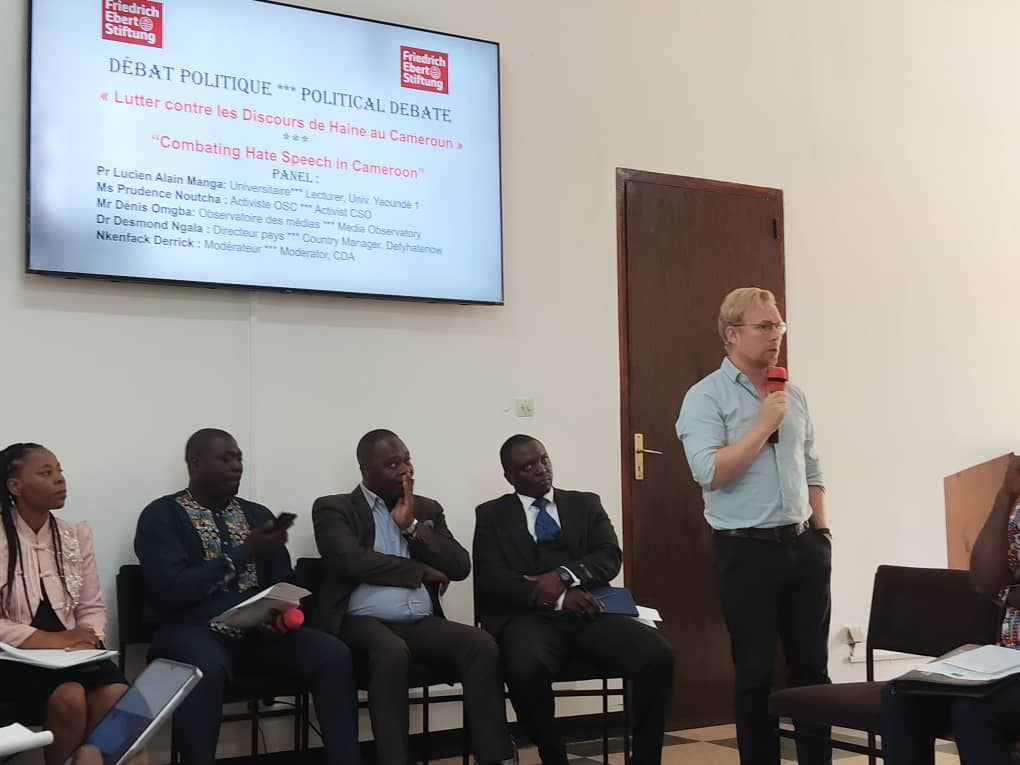
Panelists of the debate
In a climate where words can wound as deeply as weapons, Cameroon’s thought leaders gathered in Yaoundé on September 5, 2025, to confront a threat that transcends politics: hate speech. Hosted by Friedrich Ebert Stiftung, the high-level political debate brought together institutional actors, civil society champions, and media professionals in a rare moment of collective reflection and resolve.
The panel featuring Prof Lucien Alain Manga Nomo (University lecturer Yaounde 1), Madame Prudence Noutcha(Researcher, Gender and Peace Advocate) Mr Denis Omgba (Director of Media Observatory in MINCOM) , and Dr Ngala Desmond (Director of Civic Watch, Country Director #defyhatenow), did more than diagnose the problem. They issued a call to action that reverberated far beyond the walls of the conference hall. Their message was unequivocal: combating hate speech demands a united front rooted in ethical leadership, civic responsibility, and sustained collaboration across all sectors of society.
Dr Ngala Desmond, a leading voice in civic engagement and democratic renewal, delivered a strategic framework that challenged political actors to look beyond electoral cycles. His proposal was both visionary and grounded in the realities of Cameroon’s social fabric. He urged political organisations to adopt inclusive leadership models and invest in long-term civic education that empowers citizens to critically engage with public discourse.
At the heart of his intervention was a call for a shared code of conduct which is a document drafted by Civic Watch and other stakeholders to guide political communication, media narratives, and community engagement. “This code must be anchored in truth, dignity, and a public rejection of false or inflammatory statements,” Dr Ngala asserted. His words were a direct challenge to partisan interests, urging leaders to place national cohesion above political gain.
The media’s role in shaping public perception was another focal point. Dr Ngala called on journalists and media outlets to uphold ethical standards and embrace smart censorship tools that curb the spread of harmful narratives. “The tone and framing of your stories can either fracture a nation or help it heal,” he warned.
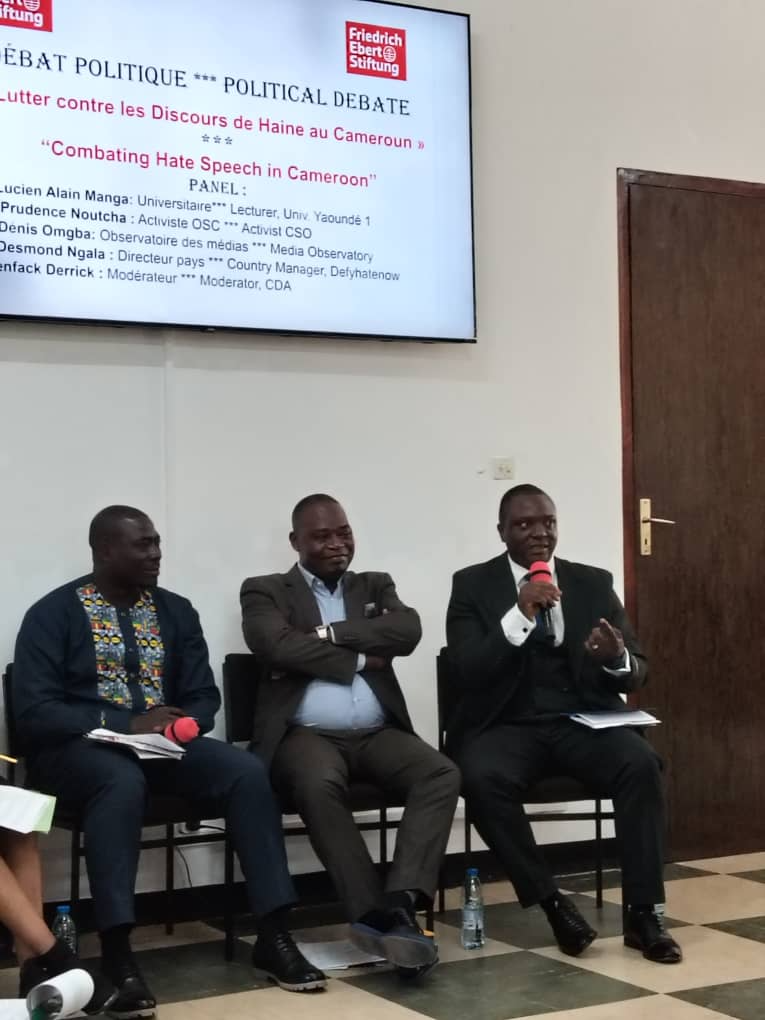
Dr Ngala sharing ideas
In a media landscape often dominated by sensationalism, his appeal for responsible reporting struck a chord. It echoed growing calls for media accountability and the need to balance press freedom with social responsibility. Journalism, he reminded the audience, must be a force for peace and not polarization.
Civil society organisations were commended for their grassroots efforts in promoting civic education and dismantling stereotypes. Among the most impactful initiatives is Peace Weavers, spearheaded by Civic Watch Cameroon in partnership with #defyhatenow. This youth-led movement has trained hundreds of leaders across Bamenda, Buea, and Yaoundé to counter hate speech both online and offline.
The training goes beyond theory as the participants engage in modules on conflict dynamics, trauma-informed storytelling, gender-inclusive dialogue, and digital advocacy. They emerge not just as informed citizens, but as community mediators and digital watchdogs—capable of identifying and defusing inflammatory narratives before they escalate.
Peace Weavers have also launched local peace clubs and WhatsApp-based alert systems, enabling real-time reporting of hate speech and misinformation. These grassroots mechanisms have proven effective in de-escalating tensions during politically sensitive moments, such as elections or communal disputes. By embedding civic vigilance into everyday interactions, Peace Weavers are transforming passive audiences into active defenders of social harmony.
Another tested counter-narrative is the Media4Peace dialogues facilitated by Civic Watch. These dialogues bring together youth, media activists, journalists, and CSOs from historically tense communities. Through facilitated conversations, participants confront stereotypes, share lived experiences, and co-create solutions rooted in mutual respect.The success of these dialogues lies not only in their outcomes but in their process: they model the kind of inclusive, empathetic engagement that national discourse desperately needs.
The Country Director of #defyhatenow Cameroon added a layer of personal responsibility to the conversation. He urged citizens to reject tribalism, value merit over favouritism, and denounce injustice even when it challenges personal comfort. “Peace is not a passive state,” he said. “It’s an active practice, cultivated through daily choices and collective accountability.”
His remarks echoed the ethos of both peace weavers and inter-community dialogues stating the fact that sustainable peace begins with individual conviction and community action.
Dr Ngala concluded with a rallying call to Cameroon’s youth, urging them to become active partners with digital platforms like Facebook in reporting hate speech and misinformation. He encouraged young people to use technology not as a weapon of division but as a tool for constructive dialogue and civic vigilance. This call to digital citizenship aligns with Civic Watch’s ongoing efforts to develop counter-narrative campaigns, meme-based advocacy, and community fact-checking hubs. These innovations demonstrate that the fight against hate speech is not just institutional—it is generational.
The debate closed with a shared commitment to a holistic approach, one that empowers every sector of society to speak out, take responsibility, and build a future free from the corrosive effects of hate speech. As Cameroon navigates complex political and social transitions, the lessons from Peace Weavers and Inter-Community Dialogues offer hope and a tested roadmap.
The emphasis is to scale these efforts, institutionalise their learnings, and ensure that Civic Watch’s voice calling for unity is not drowned out by the noise of division. Because in the end, peace is not just a policy but a practice, and it begins with us.
By Mbehni Drusilla Nange_Intern_Civic Watch
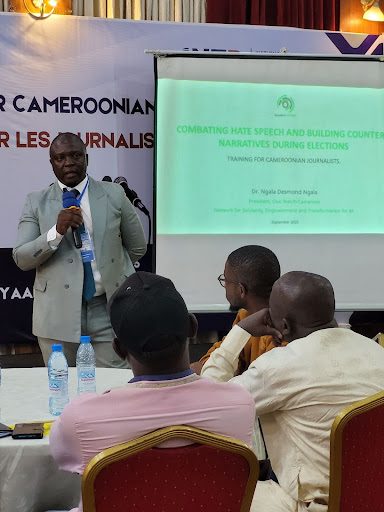
As Cameroon approaches its 2025 general elections, the nation finds itself grappling not only with political uncertainty but with a more insidious threat to information in the form of hate speech. This phenomenon, often dismissed as mere rhetoric, has become a destabilizing force capable of inciting violence, eroding public trust, and undermining democratic participation. While political campaigns dominate headlines, a quieter, more principled campaign is unfolding behind the scenes which is a movement led by journalists, civil society actors, and advocates determined to confront hate speech and restore integrity to public discourse.
On September 12, 2025, the Network for Solidarity, Empowerment and Transformation for All (NewSETA), in partnership with the National Endowment for Democracy (NED), convened a strategic training session in Yaoundé under the theme “Combating Hate Speech and Building Confidence among Electors during Elections”. Among the key contributors was Dr. Ngala Desmond, President of Civic Watch Cameroon, whose presentation offered a sobering analysis of the media’s role in perpetuating or preventing hate speech, and a roadmap for ethical journalism in politically volatile times.
Cameroon’s electoral terrain is fraught with tension leading to Ethnic divisions, regional grievances, and political polarization, which have created fertile ground for hate speech to flourish. According to the United Nations Strategy and Plan of Action on Hate Speech (2019), hate speech is defined as “any kind of communication in speech, writing or behavior that attacks or uses pejorative or discriminatory language with reference to a person or a group on the basis of who they are.” In Cameroon, this often manifests in the form of ethnic slurs, regional stigmatization, and inflammatory political rhetoric especially during election cycles.
Dr. Desmond’s presentation emphasized that journalists are no longer passive observers. They are active participants in shaping public opinion and must navigate a minefield of misinformation, political manipulation, and public distrust. He further said the “stakes are high that unchecked hate speech can escalate into communal violence, suppress voter turnout, and delegitimize electoral outcomes”. The media’s role, therefore, is not just to inform but to safeguard peace and cohesion.
The training session delved into the anatomy of hate speech, unpacking its various forms and implications. Hate speech in the Cameroonian context includes ethnic profiling, incitement to violence, targeted disinformation, and the dehumanization of political opponents. These expressions are not abstract as they are embedded in campaign slogans, social media posts, and even mainstream news coverage.
The presentation referenced global frameworks, including Article 20 of the International Covenant on Civil and Political Rights (ICCPR), which prohibits “any advocacy of national, racial or religious hatred that constitutes incitement to discrimination, hostility or violence.” In Cameroon, where political discourse often intersects with identity politics, the danger is amplified. Hate speech does not merely offend, it divides, radicalizes, and destabilizes.
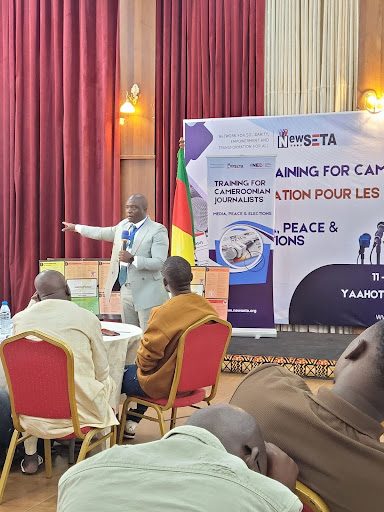
One of the most compelling insights from Dr. Desmond’s presentation was the dual role journalists play during elections. On one hand, “they can inadvertently amplify hate speech by quoting inflammatory remarks without context or critique”. On the other, “they can serve as moderators of public discourse challenging divisive narratives, promoting dialogue, and fostering understanding”.
Ethical responsibility becomes paramount as journalists must uphold impartiality, verify facts rigorously, and avoid sensationalism. They must also protect vulnerable sources and refuse to relay rhetoric that incites hatred or violence. As Desmond noted, “The journalist is not just a conveyor of information but a guardian of public conscience.” Their choices can either deepen societal fractures or build bridges across them.
Central to the training was the concept of counter-narratives stories that challenge hate speech by promoting peace, inclusion, and diversity. These narratives are not reactive; they are proactive tools for reshaping public perception. Effective counter-narratives are grounded in truth, empathetic in tone, constructive in message, and engaging in format.
Examples include highlighting interfaith dialogue initiatives, showcasing community-led peacebuilding efforts, and amplifying voices from marginalized regions. In the Anglophone regions, for instance, journalists have begun documenting stories of resilience and reconciliation, offering a counterpoint to the dominant narratives of conflict and division. These efforts align with UNESCO’s Media and Information Literacy framework, which encourages critical engagement with media content and the promotion of inclusive narratives.
The presentation offered a robust toolkit for journalists committed to ethical reporting. Fact-checking emerged as a cornerstone journalists must verify claims before publication, especially in politically charged environments. Peace journalism, which emphasizes solutions and reconciliation over conflict and sensationalism, was also highlighted as a transformative approach.
Journalists were encouraged to amplify positive initiatives, such as youth-led civic engagement projects or cross-regional collaborations. Collaboration with civil society organizations, legal experts, and fact-checking platforms was recommended to strengthen accountability and support. These strategies are not just best practices, they are lifelines in a media ecosystem under siege.
Despite their commitment, journalists face formidable obstacles. Political and economic pressures often compromise editorial independence. Threats and intimidation both online and offline are common, especially for those reporting on sensitive issues. Limited resources for verification and the rapid spread of disinformation further complicate the landscape.
To counter these challenges, Dr. Desmond advocated for ongoing training in media ethics, legal support for journalists under threat, and the establishment of solidarity networks among media professionals. He also proposed the creation of reporting platforms for hate speech, enabling journalists and citizens to document and respond to harmful content. These solutions reflect a holistic approach, one that recognizes the systemic nature of the problem and the need for collective action.
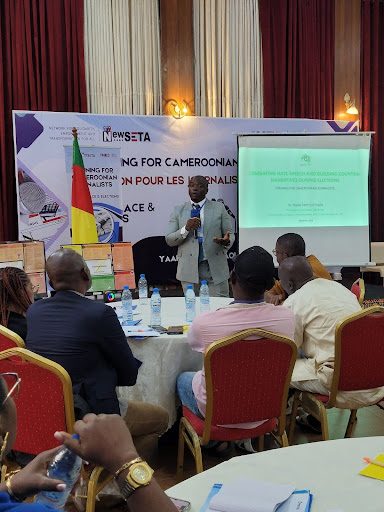
The presentation spotlighted successful initiatives that demonstrate the power of ethical journalism. The #FactsMatter237 campaign, launched during the 2020 elections, brought together journalists and fact-checkers to debunk false claims and promote verified information. The 2025 Multi-Stakeholder Coalition for Ethical Media, formed in anticipation of the upcoming elections, issued a joint declaration against disinformation and hate speech.
Balanced regional coverage also emerged as a key strategy. Journalists reporting from the Northwest and Southwest regions began highlighting peacebuilding efforts, community resilience, and inclusive governance models. These stories offered a counter-narrative to the dominant discourse of conflict and division, reinforcing the media’s role as a force for cohesion.
At the heart of this movement is Civic Watch Cameroon, an organization that has consistently championed ethical journalism, civic education, and peacebuilding. Under Dr. Desmond’s leadership, Civic Watch has launched a series of initiatives aimed at transforming media culture and empowering journalists.
Their #HateFreeCameroon campaign mobilizes journalists, educators, and youth leaders to identify and challenge hate speech in their communities. Through workshops, digital toolkits, and public forums, the campaign fosters critical media literacy and promotes inclusive dialogue. Civic Watch has also established peace clubs in secondary schools, equipping students with the skills to mediate conflict and advocate for tolerance.
In collaboration with NewSETA and other partners, Civic Watch has trained over 200 journalists in peace journalism, fact-checking, and ethical reporting. Their impact is measurable not only in the stories being told but in the trust being rebuilt between media and the public. As Dr. Desmond emphasized, “We are not just training journalists; we are cultivating a culture of responsibility, empathy, and truth.”
According to the UNHRC, the fight against hate speech is not a peripheral concern, it is central to the health of Cameroon’s democracy. Journalists have the power to shape narratives, influence public opinion, and safeguard electoral integrity. But they cannot do it alone. Civil society, policymakers, and citizens must join the campaign to confront hate speech and promote ethical discourse.
Civic Watch Cameroon offers a blueprint for impact grounded in collaboration, education, and principled storytelling. Their work reminds us that the most powerful campaigns are not always the loudest. Sometimes, they are the ones that quietly restore dignity, rebuild trust, and reimagine what democracy can be.
By Mbehni Drusilla Nange – Intern at Civic Watch
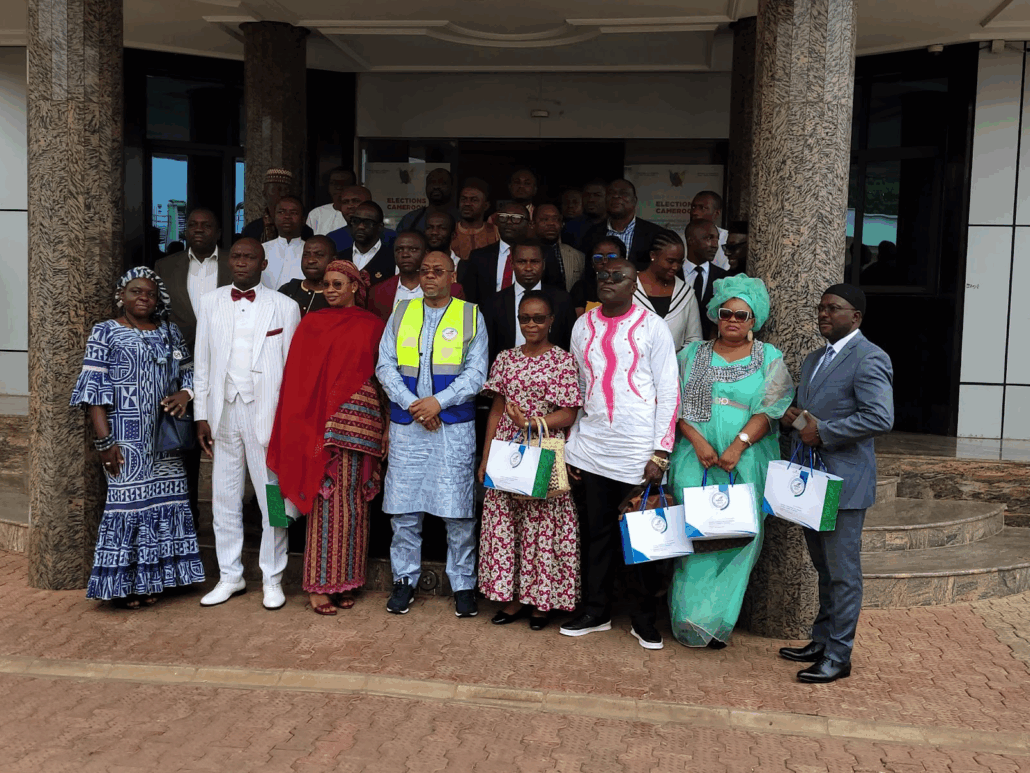
Group photo with ELECAM, panelists and participants
As Cameroon prepares for the presidential election on October 12, Civic Watch is intensifying its campaign against the forces of hate speech, misinformation, and disinformation that threaten to distort public opinion and undermine democratic participation.
Our recent participation in ELECAM’s roundtable on “The Right to Information and Media Responsibility in the Electoral Process: Issues and Challenges” reaffirmed our commitment to ethical journalism and civic integrity. Represented by Dr. Ngala Desmond Ngala, Civic Watch joined media professionals, civil society actors, and electoral authorities in a timely dialogue on how to safeguard the truth during this critical electoral season.
The roundtable served as a platform to confront the growing influence of false narratives and divisive rhetoric, especially in an era where social media can amplify misinformation at an alarming rate.
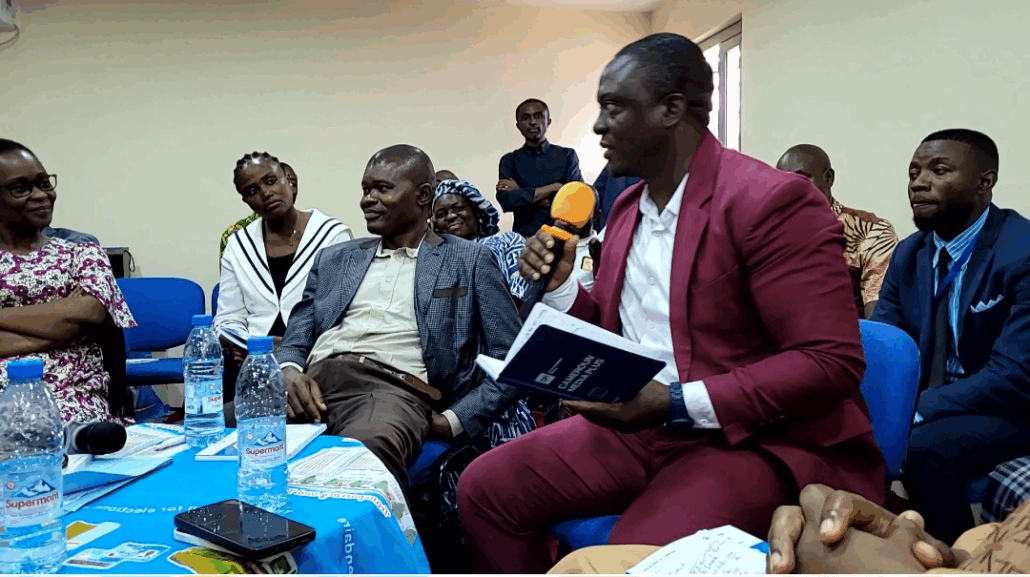
Dr Ngala’s message to journalists
Dr. Ngala’s remarks were both urgent and principled. He reminded attendees that journalists are not mere conveyors of content; they are the watchdogs of society. In a digital landscape where fake news spreads rapidly and often unchecked, he urged reporters to resist the pressure of speed and instead prioritize accuracy. Every piece of information, he stressed, must be rigorously verified before publication.
His message was clear: when journalists fail to uphold these standards, they risk fueling misinformation and disinformation, which can distort public perception and destabilize democratic processes. Civic Watch continues to support this call through its newsroom partnerships and ethics training programs, encouraging media professionals to adopt source-driven reporting and transparent editorial practices.
In addition, Dr. Ngala extended this responsibility beyond the newsroom. He emphasized that every citizen has a role to play in ethical reporting and in debunking false narratives. Verifying sources before sharing information is not just a journalistic principle; it is a civic duty.
Civic Watch echoes this call to action through its #237Check platform, which monitors viral claims and provides real-time corrections, and through its Youth Ambassadors Networks like , the Africa Factchecking Fellowship- AFFCameroon, that trains journalists, content creators, bloggers on factchecking, #Media4Peace program which skills journalists on how to report in times of conflict/crisis, elections and words to use not to fan the flames. Youth and community leaders trained on Media and Information Literacy and counter-speech strategies. These efforts are designed to build a resilient information ecosystem where the truth is protected by both professionals and the public.
In recent months, Civic Watch has documented a surge in misleading content across encrypted platforms, prompting the expansion of its digital verification toolkit and community workshops.
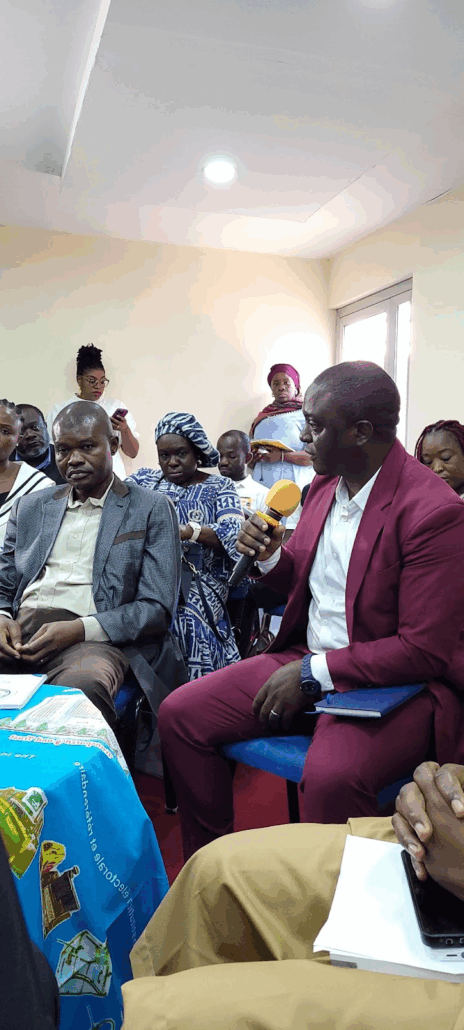
Dr. Ngala also addressed the harmful impact of ethnic bias in election coverage. He condemned the use of divisive labels such as “the candidate from Douala,” asserting that “elections are not ethnicized in Cameroon.” Such reductive framing, he argued, distracts from substantive policy debates and reinforces regional fault lines.
Civic Watch’s campaign against Hate Speech directly tackles this issue by convening community forums and partnering with traditional leaders to promote inclusive narratives. Journalists, he urged, must diversify their sources and avoid simplistic angles that reduce candidates to their origins rather than their ideas. By focusing on platforms, policies, and leadership qualities, the media can help unite voters around the issues that matter most and foster a more informed electorate.
In closing, Dr. Ngala appealed to authorities to support journalists by ensuring transparency and open access to electoral data. He reminded reporters that choosing accuracy over speed is not a favor to anyone; it is a service to the nation and a safeguard for their own credibility.
As Civic Watch looks ahead to October 12, we reaffirm our commitment to ethical, source-driven journalism and to empowering citizens to defend the truth. The fight against hate speech and disinformation is not a side campaign; it is central to the health of our democracy.
Through coordinated efforts across media, civil society, and grassroots communities, we can ensure that Cameroon’s 2025 presidential election is not only peaceful and participatory but also anchored in truth.
Par Mbehni Drusilla Nange, stagiaire chez Civic Watch
Alors que le Cameroun se prépare pour l’élection présidentielle du 12 octobre, Civic Watch intensifie sa campagne contre les discours de haine, la désinformation et la mésinformation qui menacent de fausser l’opinion publique et de saper la participation démocratique.
Notre récente participation à la table ronde d’ELECAM sur « Le Droit à l’information et la responsabilité des médias dans le processus électoral : enjeux et défis » a réaffirmé notre engagement en faveur du journalisme éthique et de l’intégrité civique. Représenté par le Dr Ngala Desmond Ngala, Civic Watch a rejoint des professionnels des médias, des acteurs de la société civile et des autorités électorales pour un dialogue opportun sur la manière de préserver la vérité durant cette période électorale critique.
La table ronde a servi de plateforme pour confronter l’influence croissante des faux récits et de la rhétorique de division, en particulier à une époque où les réseaux sociaux peuvent amplifier la désinformation à un rythme alarmant.
Le message du Dr Ngala aux journalistes était à la fois urgent et basé sur des principes forts. Il a rappelé aux participants que les journalistes ne sont pas de simples relais d’informations ; ils sont les sentinelles de la société. Dans un paysage numérique où les fausses nouvelles se propagent rapidement et souvent sans vérification, il a exhorté les journalistes à résister à la pression de la vitesse et à privilégier la précision. Chaque information, a-t-il souligné, doit être rigoureusement vérifiée avant publication.
Son message était clair : lorsque les journalistes ne respectent pas ces normes, ils risquent d’alimenter la désinformation et la mésinformation, ce qui peut fausser la perception du public et déstabiliser les processus démocratiques. Civic Watch soutient cet appel à travers ses partenariats avec les rédactions et ses programmes de formation à l’éthique, encourageant les professionnels des médias à adopter un journalisme basé sur les sources et des pratiques éditoriales transparentes.
En outre, le Dr Ngala a étendu cette responsabilité au-delà des rédactions. Il a souligné que chaque citoyen a un rôle à jouer dans un journalisme éthique et dans le démenti des faux récits. Vérifier les sources avant de partager une information n’est pas seulement un principe journalistique ; c’est un devoir civique.
Civic Watch fait écho à cet appel à l’action à travers sa plateforme #237Check, qui surveille les fausses affirmations virales et fournit des corrections en temps réel. De plus, elle agit via ses réseaux d’ambassadeurs de la jeunesse, comme le programme Africa Factchecking Fellowship (AFFCameroon), qui forme des journalistes, des créateurs de contenu et des blogueurs au fact-checking, ainsi que le programme #Media4Peace qui enseigne aux journalistes comment couvrir les conflits, les crises et les élections, en choisissant les mots justes pour ne pas attiser les tensions. Ces efforts visent à construire un écosystème d’information résilient où la vérité est défendue par les professionnels comme par le public.
Au cours des derniers mois, Civic Watch a documenté une augmentation du contenu trompeur sur les plateformes chiffrées, ce qui a incité l’organisation à élargir sa trousse d’outils de vérification numérique et à intensifier ses ateliers communautaires.
Le Dr Ngala a également abordé l’impact néfaste des préjugés ethniques dans la couverture électorale. Il a condamné l’utilisation d’étiquettes de division telles que « le candidat de Douala », affirmant que « les élections ne sont pas ethnicisées au Cameroun ». Il soutient qu’un tel cadrage réducteur détourne les débats de fond sur les politiques et renforce les lignes de fracture régionales.
La campagne de Civic Watch contre les discours de haine s’attaque directement à ce problème en organisant des forums communautaires et en s’associant à des chefs traditionnels pour promouvoir des récits inclusifs. Les journalistes, a-t-il insisté, doivent diversifier leurs sources et éviter les angles simplistes qui réduisent les candidats à leurs origines plutôt qu’à leurs idées. En se concentrant sur les programmes, les politiques et les qualités de leadership, les médias peuvent aider à unir les électeurs autour des questions qui comptent le plus et favoriser un électorat mieux informé.
En conclusion, le Dr Ngala a lancé un appel aux autorités pour qu’elles soutiennent les journalistes en garantissant la transparence et l’accès ouvert aux données électorales. Il a rappelé aux reporters que choisir la précision plutôt que la vitesse n’est pas un service rendu à quiconque ; c’est un service rendu à la nation et une garantie pour leur propre crédibilité.
Alors que Civic Watch se tourne vers le 12 octobre, nous réaffirmons notre engagement en faveur d’un journalisme éthique et basé sur des sources fiables, et notre volonté de donner aux citoyens les moyens de défendre la vérité. La lutte contre les discours de haine et la désinformation n’est pas une campagne secondaire ; elle est au cœur de la santé de notre démocratie.
Par des efforts coordonnés entre les médias, la société civile et les communautés de base, nous pouvons faire en sorte que l’élection présidentielle camerounaise de 2025 soit non seulement pacifique et participative, mais aussi ancrée dans la vérité.
Par Mbehni Drusilla Nange, stagiaire chez Civic Watch
Alors que le Cameroun se prépare pour l’élection présidentielle du 12 octobre, Civic Watch intensifie sa campagne contre les discours de haine, la désinformation et la mésinformation qui menacent de fausser l’opinion publique et de saper la participation démocratique.
Notre récente participation à la table ronde d’ELECAM sur « Le Droit à l’information et la responsabilité des médias dans le processus électoral : enjeux et défis » a réaffirmé notre engagement en faveur du journalisme éthique et de l’intégrité civique. Représenté par le Dr Ngala Desmond Ngala, Civic Watch a rejoint des professionnels des médias, des acteurs de la société civile et des autorités électorales pour un dialogue opportun sur la manière de préserver la vérité durant cette période électorale critique.
La table ronde a servi de plateforme pour confronter l’influence croissante des faux récits et de la rhétorique de division, en particulier à une époque où les réseaux sociaux peuvent amplifier la désinformation à un rythme alarmant.
Le message du Dr Ngala aux journalistes était à la fois urgent et basé sur des principes forts. Il a rappelé aux participants que les journalistes ne sont pas de simples relais d’informations ; ils sont les sentinelles de la société. Dans un paysage numérique où les fausses nouvelles se propagent rapidement et souvent sans vérification, il a exhorté les journalistes à résister à la pression de la vitesse et à privilégier la précision. Chaque information, a-t-il souligné, doit être rigoureusement vérifiée avant publication.
Son message était clair : lorsque les journalistes ne respectent pas ces normes, ils risquent d’alimenter la désinformation et la mésinformation, ce qui peut fausser la perception du public et déstabiliser les processus démocratiques. Civic Watch soutient cet appel à travers ses partenariats avec les rédactions et ses programmes de formation à l’éthique, encourageant les professionnels des médias à adopter un journalisme basé sur les sources et des pratiques éditoriales transparentes.
En outre, le Dr Ngala a étendu cette responsabilité au-delà des rédactions. Il a souligné que chaque citoyen a un rôle à jouer dans un journalisme éthique et dans le démenti des faux récits. Vérifier les sources avant de partager une information n’est pas seulement un principe journalistique ; c’est un devoir civique.
Civic Watch fait écho à cet appel à l’action à travers sa plateforme #237Check, qui surveille les fausses affirmations virales et fournit des corrections en temps réel. De plus, elle agit via ses réseaux d’ambassadeurs de la jeunesse, comme le programme Africa Factchecking Fellowship (AFFCameroon), qui forme des journalistes, des créateurs de contenu et des blogueurs au fact-checking, ainsi que le programme #Media4Peace qui enseigne aux journalistes comment couvrir les conflits, les crises et les élections, en choisissant les mots justes pour ne pas attiser les tensions. Ces efforts visent à construire un écosystème d’information résilient où la vérité est défendue par les professionnels comme par le public.
Au cours des derniers mois, Civic Watch a documenté une augmentation du contenu trompeur sur les plateformes chiffrées, ce qui a incité l’organisation à élargir sa trousse d’outils de vérification numérique et à intensifier ses ateliers communautaires.
Le Dr Ngala a également abordé l’impact néfaste des préjugés ethniques dans la couverture électorale. Il a condamné l’utilisation d’étiquettes de division telles que « le candidat de Douala », affirmant que « les élections ne sont pas ethnicisées au Cameroun ». Il soutient qu’un tel cadrage réducteur détourne les débats de fond sur les politiques et renforce les lignes de fracture régionales.
La campagne de Civic Watch contre les discours de haine s’attaque directement à ce problème en organisant des forums communautaires et en s’associant à des chefs traditionnels pour promouvoir des récits inclusifs. Les journalistes, a-t-il insisté, doivent diversifier leurs sources et éviter les angles simplistes qui réduisent les candidats à leurs origines plutôt qu’à leurs idées. En se concentrant sur les programmes, les politiques et les qualités de leadership, les médias peuvent aider à unir les électeurs autour des questions qui comptent le plus et favoriser un électorat mieux informé.
En conclusion, le Dr Ngala a lancé un appel aux autorités pour qu’elles soutiennent les journalistes en garantissant la transparence et l’accès ouvert aux données électorales. Il a rappelé aux reporters que choisir la précision plutôt que la vitesse n’est pas un service rendu à quiconque ; c’est un service rendu à la nation et une garantie pour leur propre crédibilité.
Alors que Civic Watch se tourne vers le 12 octobre, nous réaffirmons notre engagement en faveur d’un journalisme éthique et basé sur des sources fiables, et notre volonté de donner aux citoyens les moyens de défendre la vérité. La lutte contre les discours de haine et la désinformation n’est pas une campagne secondaire ; elle est au cœur de la santé de notre démocratie.
Par des efforts coordonnés entre les médias, la société civile et les communautés de base, nous pouvons faire en sorte que l’élection présidentielle camerounaise de 2025 soit non seulement pacifique et participative, mais aussi ancrée dans la vérité.
Par Tantan Patience, bénévole de Civic Watch
Bamenda, Cameroun – 4 septembre 2025
Pour les scrutins d’octobre 2025, un forum de dialogue multipartite s’est réuni à Bamenda, dans la région du Nord-Ouest, le 4 septembre 2025. L’événement, placé sous le thème « Promouvoir des élections pacifiques, inclusives et exemptes de haine… », a rassemblé diverses personnalités pour faire avancer les valeurs démocratiques et la cohésion sociale dans la région.
Organisée par Civic Watch en tant que membre de la Coalition nationale pour le bilinguisme, cette session de dialogue d’une journée a rassemblé des leaders de partis politiques, des organisations de jeunesse, des acteurs de la société civile et des associations de médias. L’objectif était de discuter des moyens de favoriser un processus électoral pacifique, inclusif et sans haine. Les discussions ont également porté sur la dénonciation des discours de haine, de la xénophobie et de la violence pendant et après les campagnes, la promotion d’un journalisme éthique et le renforcement de la résilience des communautés face à la désinformation et aux discours de division.
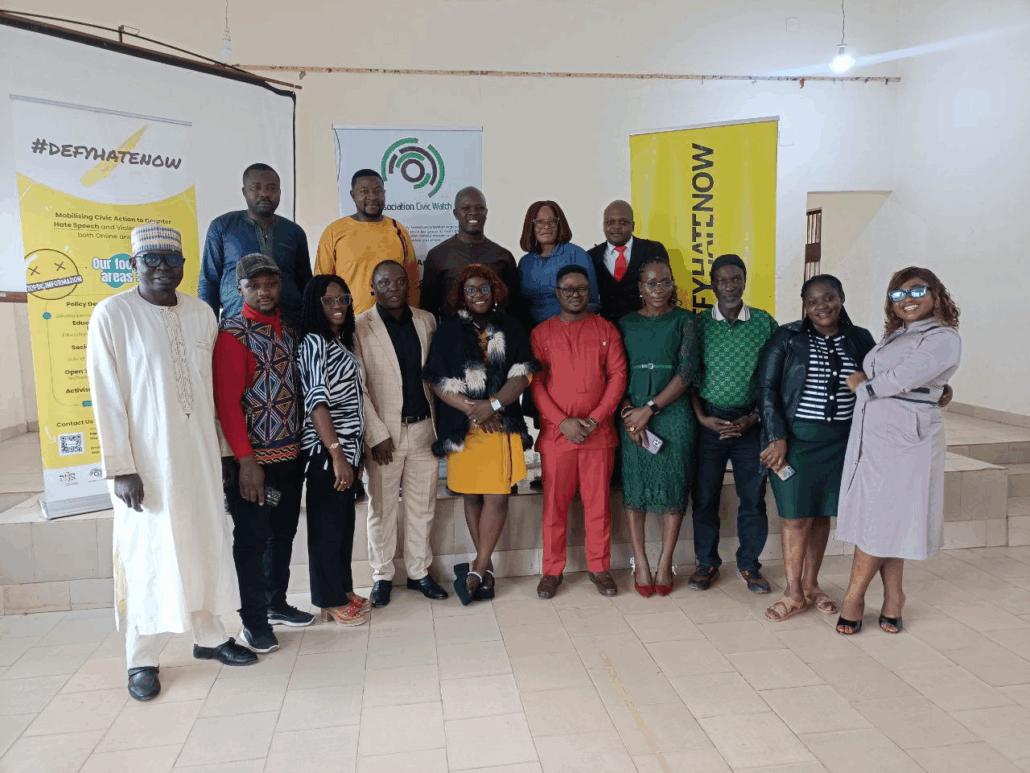
Le forum a permis aux parties prenantes de présenter leurs actions, d’identifier les mesures qui peuvent être prises et de rappeler les responsabilités éthiques qui leur incombent pendant les élections.
Dans son allocution, le Dr Ngala Desmond Ngala, responsable de Civic Watch, a souligné que les partis politiques peuvent mener des élections sans échanger de violences et sans rhétorique incendiaire. Il leur a demandé de s’impliquer dans l’éducation civique inclusive, de développer une communication efficace, et de toujours considérer leur responsabilité envers les citoyens et la communauté dans son ensemble.
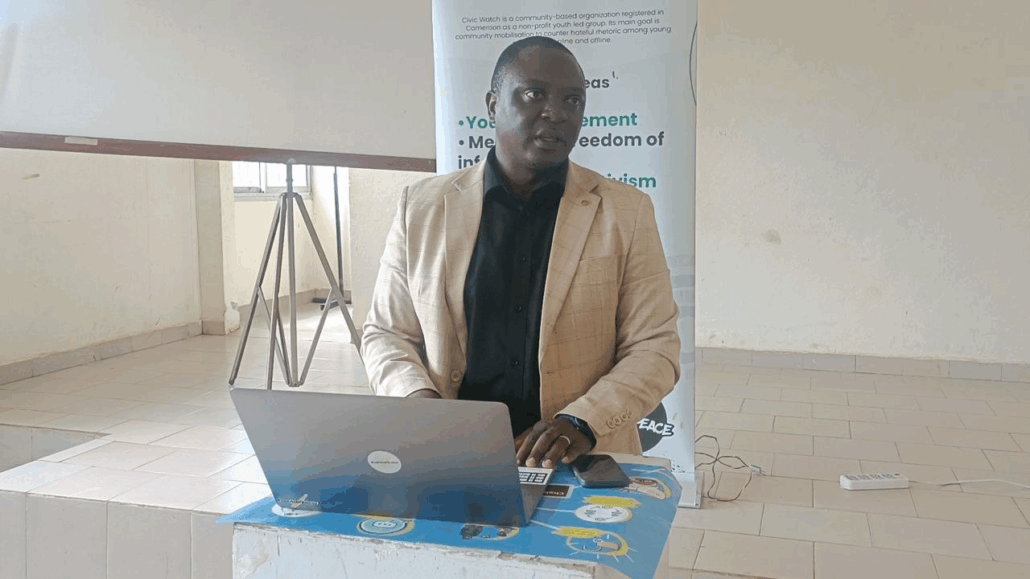
S’adressant aux médias, le Dr Ngala a rappelé aux représentants des associations de journalistes qu’en tant que créateurs d’ordre du jour, ils ne doivent pas se contenter de relayer ce que les politiciens disent. Il a insisté sur leur rôle dans la gestion des situations conflictuelles lors des émissions et des reportages. Il a également rappelé que ce qui est publié peut soit accroître, soit réduire la haine et les échanges xénophobes entre les partisans. Malgré des défis tels que l’accès limité aux sources, les conflits d’intérêts, le sensationnalisme et les affiliations politiques, les journalistes ont été encouragés à vérifier les informations avant leur diffusion.
Les organisations de jeunesse et de la société civile ont également été appelées à aller au-delà de l’encouragement à l’inscription sur les listes électorales et à inspirer une participation active, en aidant les citoyens à distinguer les pratiques positives des pratiques néfastes.
Le Dr Sakah Bernard, animateur de la session, a quant à lui fait remarquer que les discours de haine détruisent la résilience des communautés en incitant à la violence, en affaiblissant la démocratie, en favorisant l’apathie politique, en approfondissant les divisions et en intimidant les défenseurs de la diversité.
Les participants ont suggéré des approches locales, notamment le dialogue interpersonnel, la création de clubs de défense de la paix pour les jeunes dans les écoles et les communautés, et l’amplification de la vérification des faits sur les réseaux sociaux.
Les discussions de groupe sur la collaboration des communautés avec les partis politiques et les médias ont donné lieu à des recommandations telles que l’organisation d’audiences publiques entre les leaders politiques et les communautés, la mise en place de partenariats entre les médias locaux/régionaux et les politiciens pour promouvoir la vérification des faits, et la sensibilisation aux dangers du journalisme citoyen.
À la clôture de la session, chaque groupe de parties prenantes a appelé ses homologues à se concentrer sur leurs objectifs, à former des coalitions solides et à renforcer les liens plutôt que d’alimenter les divisions. Enfin, ils ont souligné l’importance d’améliorer les compétences en communication pour favoriser l’unité avant et après les campagnes.