

Civic Watch_#defyhatenow at FES Cameroon: Safeguarding the 2025 Polls Against Electoral Hate Speech
By Mbehni Drusilla Nange_Intern_Civic Watch
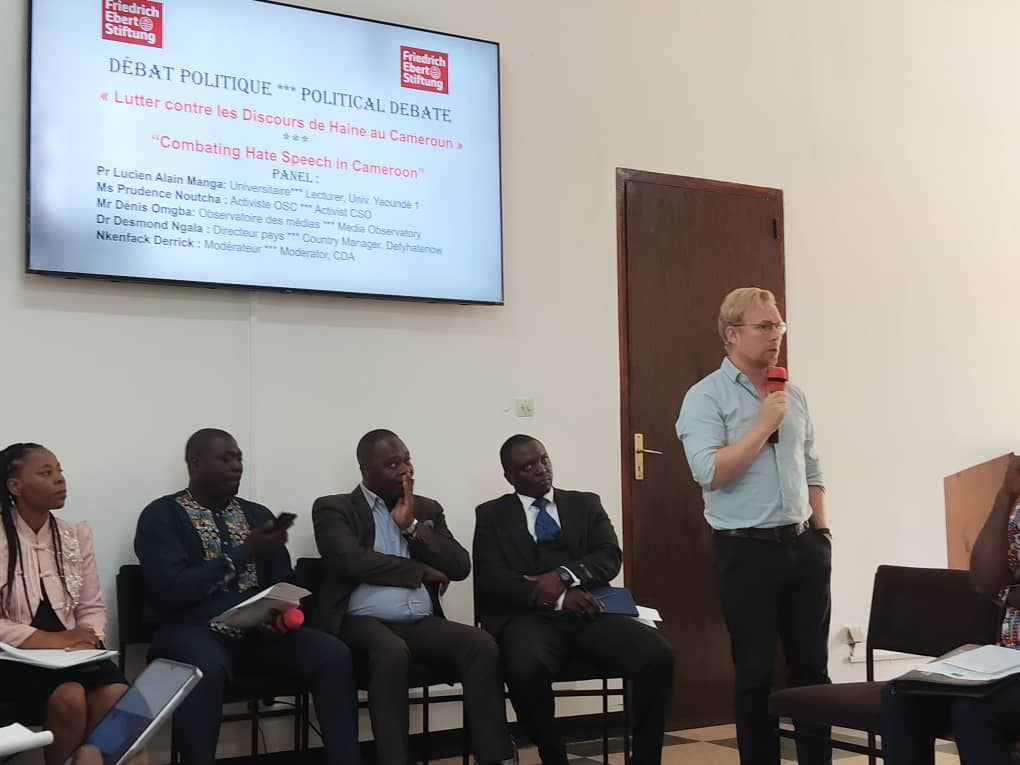
Panelists of the debate
In a climate where words can wound as deeply as weapons, Cameroon’s thought leaders gathered in Yaoundé on September 5, 2025, to confront a threat that transcends politics: hate speech. Hosted by Friedrich Ebert Stiftung, the high-level political debate brought together institutional actors, civil society champions, and media professionals in a rare moment of collective reflection and resolve.
The panel featuring Prof Lucien Alain Manga Nomo (University lecturer Yaounde 1), Madame Prudence Noutcha(Researcher, Gender and Peace Advocate) Mr Denis Omgba (Director of Media Observatory in MINCOM) , and Dr Ngala Desmond (Director of Civic Watch, Country Director #defyhatenow), did more than diagnose the problem. They issued a call to action that reverberated far beyond the walls of the conference hall. Their message was unequivocal: combating hate speech demands a united front rooted in ethical leadership, civic responsibility, and sustained collaboration across all sectors of society.
A Framework for Civic Renewal
Dr Ngala Desmond, a leading voice in civic engagement and democratic renewal, delivered a strategic framework that challenged political actors to look beyond electoral cycles. His proposal was both visionary and grounded in the realities of Cameroon’s social fabric. He urged political organisations to adopt inclusive leadership models and invest in long-term civic education that empowers citizens to critically engage with public discourse.
At the heart of his intervention was a call for a shared code of conduct which is a document drafted by Civic Watch and other stakeholders to guide political communication, media narratives, and community engagement. “This code must be anchored in truth, dignity, and a public rejection of false or inflammatory statements,” Dr Ngala asserted. His words were a direct challenge to partisan interests, urging leaders to place national cohesion above political gain.
Journalism As a Force for Peace
The media’s role in shaping public perception was another focal point. Dr Ngala called on journalists and media outlets to uphold ethical standards and embrace smart censorship tools that curb the spread of harmful narratives. “The tone and framing of your stories can either fracture a nation or help it heal,” he warned.
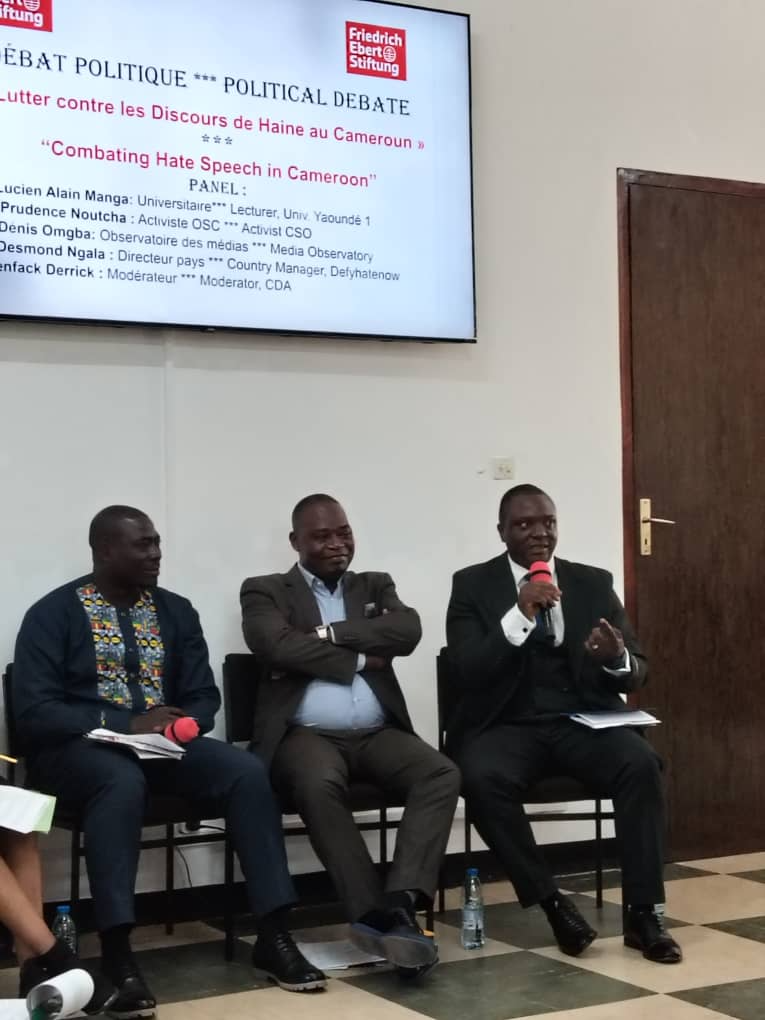
Dr Ngala sharing ideas
In a media landscape often dominated by sensationalism, his appeal for responsible reporting struck a chord. It echoed growing calls for media accountability and the need to balance press freedom with social responsibility. Journalism, he reminded the audience, must be a force for peace and not polarization.
Civic Watch’s #defyhatenow: Proven Impact. A Model to Replicate
Civil society organisations were commended for their grassroots efforts in promoting civic education and dismantling stereotypes. Among the most impactful initiatives is Peace Weavers, spearheaded by Civic Watch Cameroon in partnership with #defyhatenow. This youth-led movement has trained hundreds of leaders across Bamenda, Buea, and Yaoundé to counter hate speech both online and offline.
The training goes beyond theory as the participants engage in modules on conflict dynamics, trauma-informed storytelling, gender-inclusive dialogue, and digital advocacy. They emerge not just as informed citizens, but as community mediators and digital watchdogs—capable of identifying and defusing inflammatory narratives before they escalate.
Peace Weavers have also launched local peace clubs and WhatsApp-based alert systems, enabling real-time reporting of hate speech and misinformation. These grassroots mechanisms have proven effective in de-escalating tensions during politically sensitive moments, such as elections or communal disputes. By embedding civic vigilance into everyday interactions, Peace Weavers are transforming passive audiences into active defenders of social harmony.
Another tested counter-narrative is the Media4Peace dialogues facilitated by Civic Watch. These dialogues bring together youth, media activists, journalists, and CSOs from historically tense communities. Through facilitated conversations, participants confront stereotypes, share lived experiences, and co-create solutions rooted in mutual respect.The success of these dialogues lies not only in their outcomes but in their process: they model the kind of inclusive, empathetic engagement that national discourse desperately needs.
The Country Director of #defyhatenow Cameroon added a layer of personal responsibility to the conversation. He urged citizens to reject tribalism, value merit over favouritism, and denounce injustice even when it challenges personal comfort. “Peace is not a passive state,” he said. “It’s an active practice, cultivated through daily choices and collective accountability.”
His remarks echoed the ethos of both peace weavers and inter-community dialogues stating the fact that sustainable peace begins with individual conviction and community action.
Dr Ngala concluded with a rallying call to Cameroon’s youth, urging them to become active partners with digital platforms like Facebook in reporting hate speech and misinformation. He encouraged young people to use technology not as a weapon of division but as a tool for constructive dialogue and civic vigilance. This call to digital citizenship aligns with Civic Watch’s ongoing efforts to develop counter-narrative campaigns, meme-based advocacy, and community fact-checking hubs. These innovations demonstrate that the fight against hate speech is not just institutional—it is generational.
The debate closed with a shared commitment to a holistic approach, one that empowers every sector of society to speak out, take responsibility, and build a future free from the corrosive effects of hate speech. As Cameroon navigates complex political and social transitions, the lessons from Peace Weavers and Inter-Community Dialogues offer hope and a tested roadmap.
The emphasis is to scale these efforts, institutionalise their learnings, and ensure that Civic Watch’s voice calling for unity is not drowned out by the noise of division. Because in the end, peace is not just a policy but a practice, and it begins with us.


Laisser un commentaire
Rejoindre la discussion?N’hésitez pas à contribuer !