
Civic Watch Equips Journalists to Document Human Rights, Promote Ethical AI, and Build Safer Digital Spaces
In an era where misinformation spreads in seconds, artificial intelligence is transforming news production, and journalists increasingly face threats both online and offline while protecting civic space has become more urgent than ever. Strengthening democracy now depends not only on defending press freedom but also on ensuring that journalists have the skills, knowledge, and digital resilience, to report responsibly while safeguarding fundamental rights.
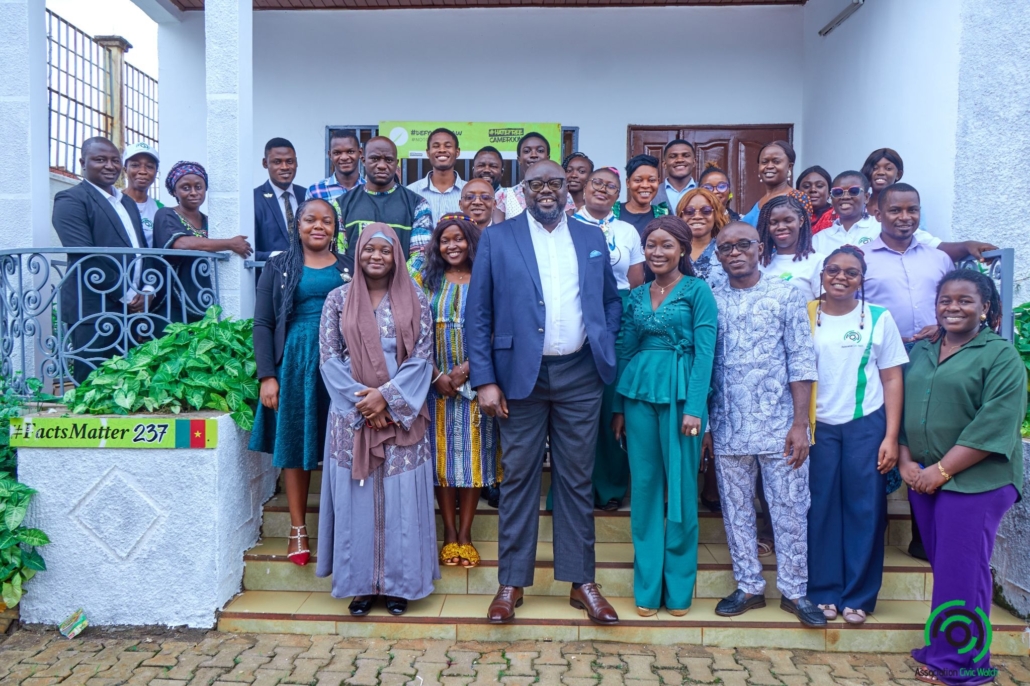
It is against this backdrop that Civic Watch brought together journalists in Yaoundé for a 2-day capacity building workshop under the theme “Strengthening Civic Space: Protection of Fundamental Freedoms Through Improved Documentation and Response to Discrimination, Hate Speech and Media Repression.” The initiative was designed to move beyond discussions by providing practical solutions to some of the most pressing challenges facing journalism today, including the misuse of artificial intelligence, growing digital insecurity, hate speech, discrimination, and attacks on media professionals.
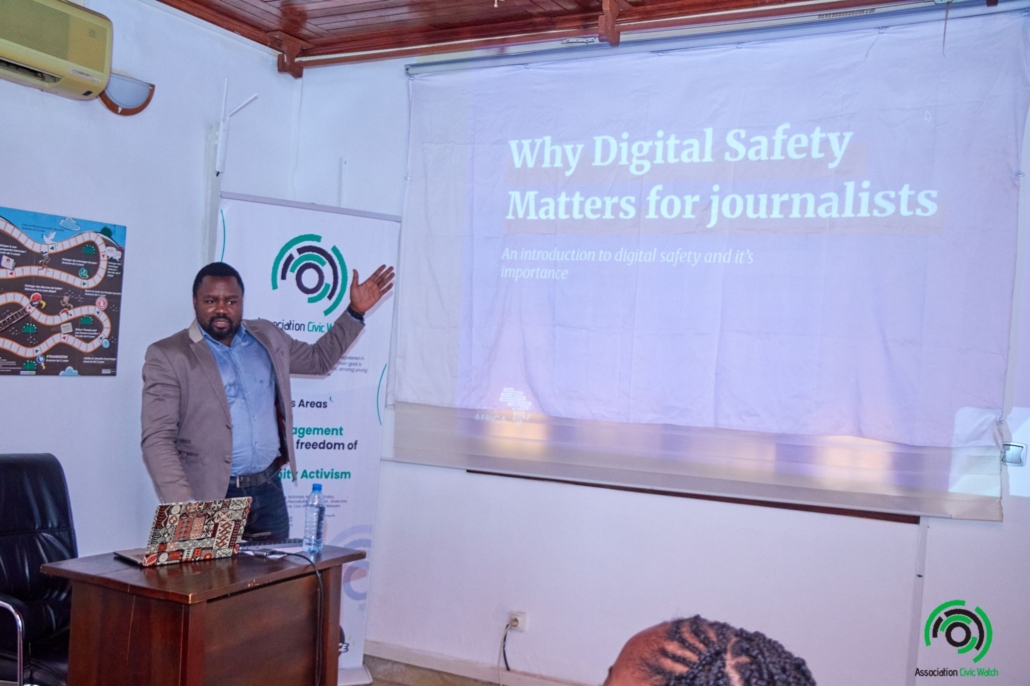
Rather than treating these issues as isolated problems, the workshop demonstrated how they are deeply interconnected. Facilitating the session on “Digital safety and Building Collective Action to Protect Civic Space”, Fotso Fonkam stated that “a journalist who lacks digital security is more vulnerable to surveillance and intimidation”. Failure to document violations against journalists weakens accountability and allows abuses against press freedom to continue unchecked.
The session on “Ethical Use of AI in Journalism” by Chinedu Hardy, recommended that “artificial intelligence should strengthen journalism, not replace its ethical foundations”. During the session, participants explored how AI can responsibly support research, transcription, translation, data analysis, and newsroom efficiency, enabling journalists to spend more time on investigation, verification, and public interest reporting. At the same time, Hardy warned against practices that undermine public trust, including fabricated sources, manipulated images, deepfakes, and voice cloning without consent. “A newsroom that embraces artificial intelligence without ethical safeguards risks amplifying misinformation”, he emphasized.
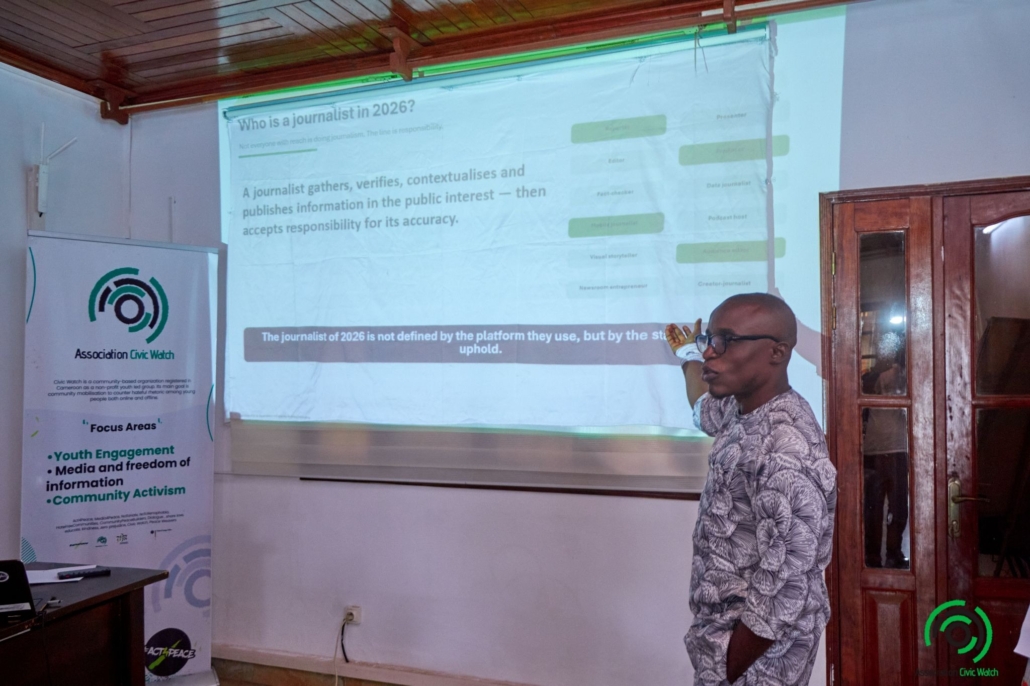
The training also addressed the growing pressure on press freedom in Cameroon and many parts of the world, where journalists increasingly face intimidation, arbitrary arrests, online harassment, surveillance, censorship, legal threats, and physical attacks simply for carrying out their work. As civic space continues to shrink, participants explored the importance of systematically documenting violations against journalists. They learned that “accurate documentation not only supports accountability and access to justice but also preserves credible evidence, strengthens advocacy, informs policy and legal reforms, and helps expose patterns of abuse that can contribute to preventing future violations”, Dr Kinang stated during his presentation on “Understanding and Documenting Human Rights Violations Against Journalists”.
By improving journalists’ understanding of national and international human rights frameworks, the workshop positioned human rights documentation as more than a reporting exercise. It became a tool for accountability, institutional reform, and collective protection. Journalists were encouraged to build stronger professional solidarity, promote justice, preserve evidence of abuses, and create safer environments where media professionals can carry out their work without fear.
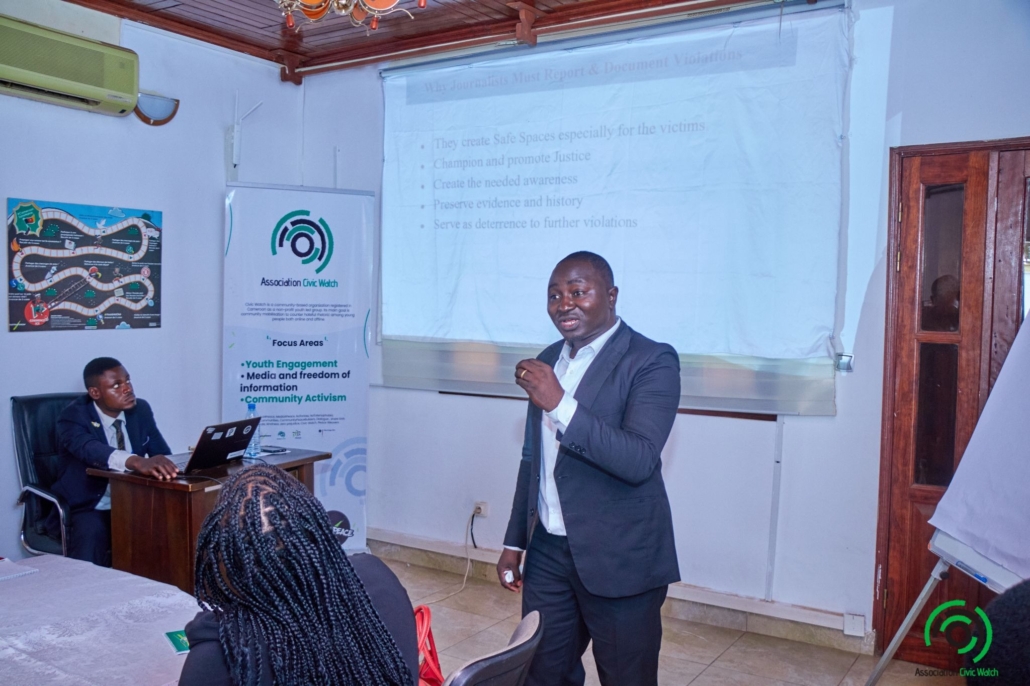
Conflict-sensitive reporting handled on days 1 and 2 by Eugene Nforngwa and Amindeh Blaise Atabong, respectively on the topic “Ethical Rights-Based and Conflict Sensitive Reporting to Counter Hate Speech and Discrimination” formed another pillar of the workshop’s approach to protecting civic space. Participants examined how irresponsible reporting can unintentionally fuel division, reinforce stereotypes, or escalate tensions within communities. Through practical case studies, they explored how careful verification, balanced reporting, contextualization, and the use of neutral language can reduce harm while strengthening public trust.
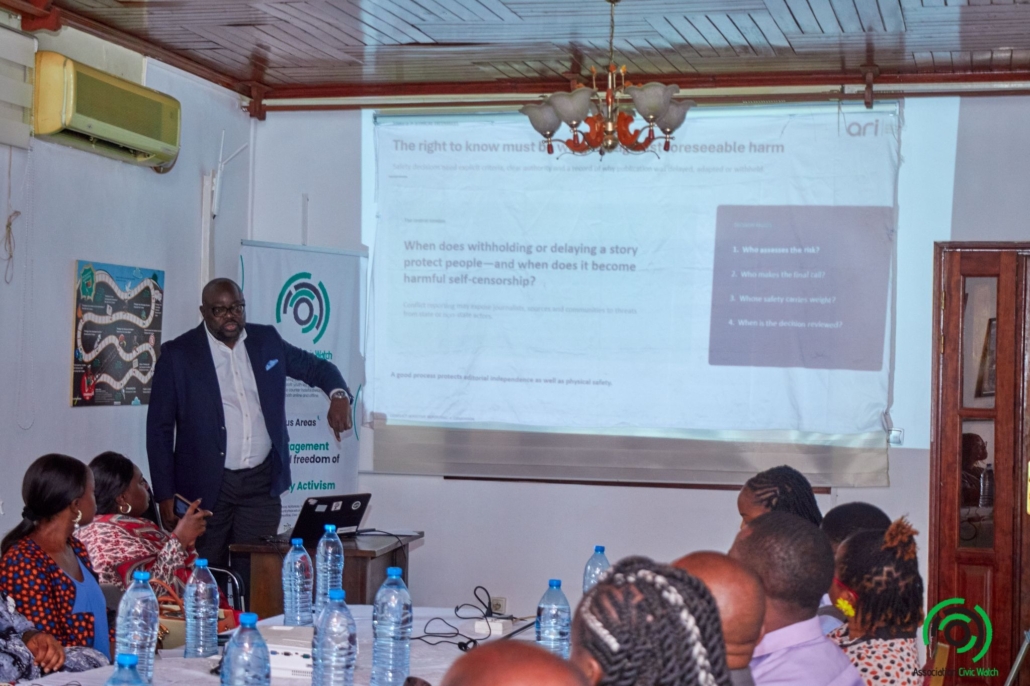
Nforngwa highlighted that “journalism should not merely describe conflict but should also contribute to informed public dialogue” and this was backed up by Amindeh who supported the claim stating that “by avoiding sensationalism and placing facts above emotion, journalists become active contributors to social cohesion and peaceful coexistence”.
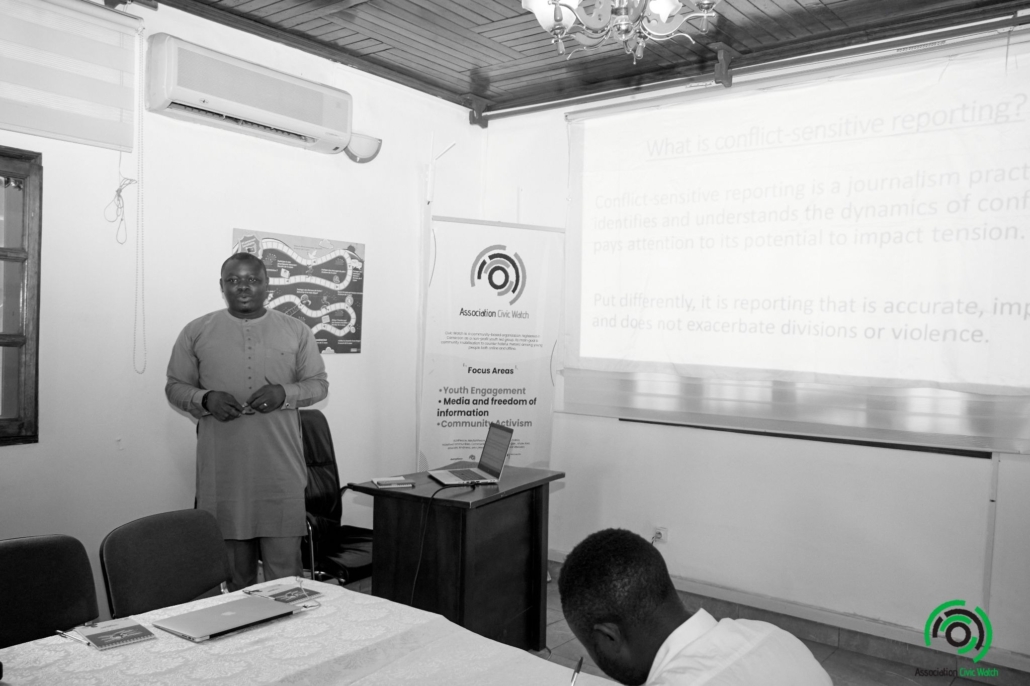
Recognizing that modern journalism increasingly operates in digital environments, Civic Watch placed significant emphasis on digital security as a fundamental requirement for press freedom. Participants explored the realities of online surveillance, identity theft, cyber harassment, and other digital threats that continue to target journalists and human rights defenders.
The workshop introduced practical measures that journalists can immediately adopt to protect themselves and their work. These included stronger password management, device security, protection of confidential sources, incident preparedness, and secure communication practices. Beyond technical knowledge, the sessions promoted a culture of prevention, encouraging journalists to view digital safety not as an optional skill but as an essential part of professional journalism.
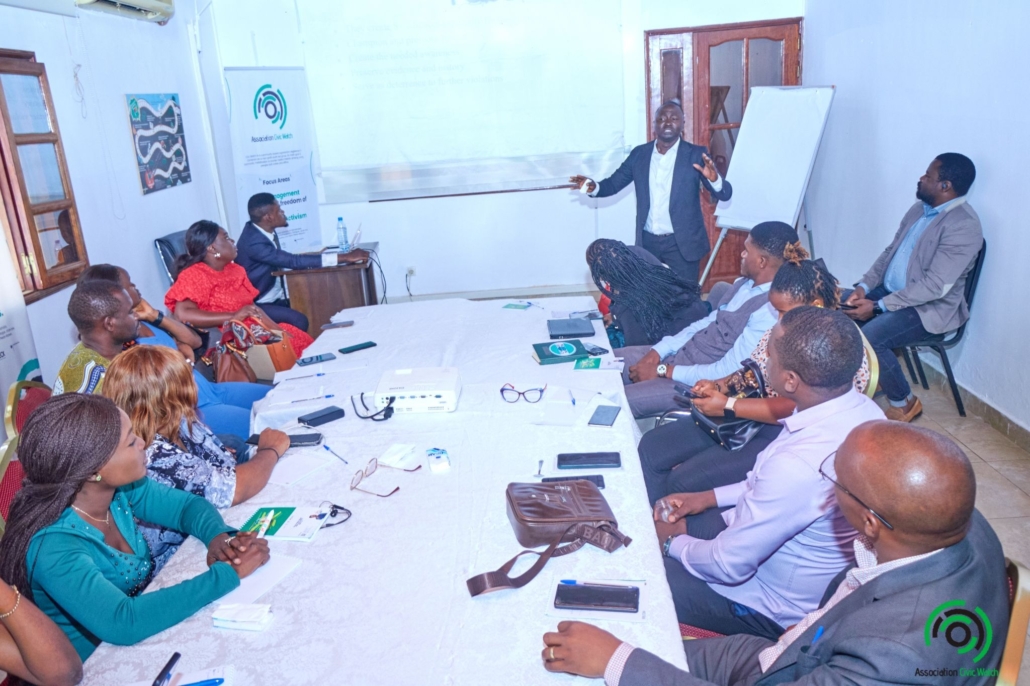
By strengthening digital resilience, the initiative contributes directly to creating safer digital spaces where journalists can investigate, communicate, and publish without unnecessary exposure to cyber threats.
The impact of the workshop extended beyond technical skills as participants left with a deeper understanding that protecting civic space is a shared responsibility requiring ethical journalism, respect for human rights, responsible use of technology, and collective action against discrimination, hate speech, and media repression. Bizel Bi-Mafor, one of the participants stated that “I now understand how to leverage technology to spot fake news early while ensuring my own reporting remains ethically sound and grounded in truth”. Judith Ndongo, another participant who sat through the workshop stated that “I now know how to report on human rights issues, which are one of the topics covered by my news website. I also have a better understanding of my responsibility when sharing information during times of crisis, especially the need to always consider the impact that a piece of information could have before publishing it”. The workshop was an eye opener as another participant,Victor Bertinot Sigha, said “As a culture, economic and human interest reporter, I learned through the workshop that I really didn’t know much on digital rights and my rights as a journalist. It was enriching”.
The interactive nature of the sessions encouraged journalists to share experiences, exchange practical solutions, and strengthen professional networks that can provide support long after the workshop concluded.
As digital technologies continue to reshape the information landscape, initiatives like this demonstrate that the future of journalism depends not on how quickly information is published, but on how responsibly it is produced. By empowering journalists to use artificial intelligence ethically, document human rights violations effectively, report conflicts responsibly, and strengthen their digital security, Civic Watch is contributing to a more resilient media ecosystem where truth prevails over manipulation, rights are defended, and civic space remains open for everyone.
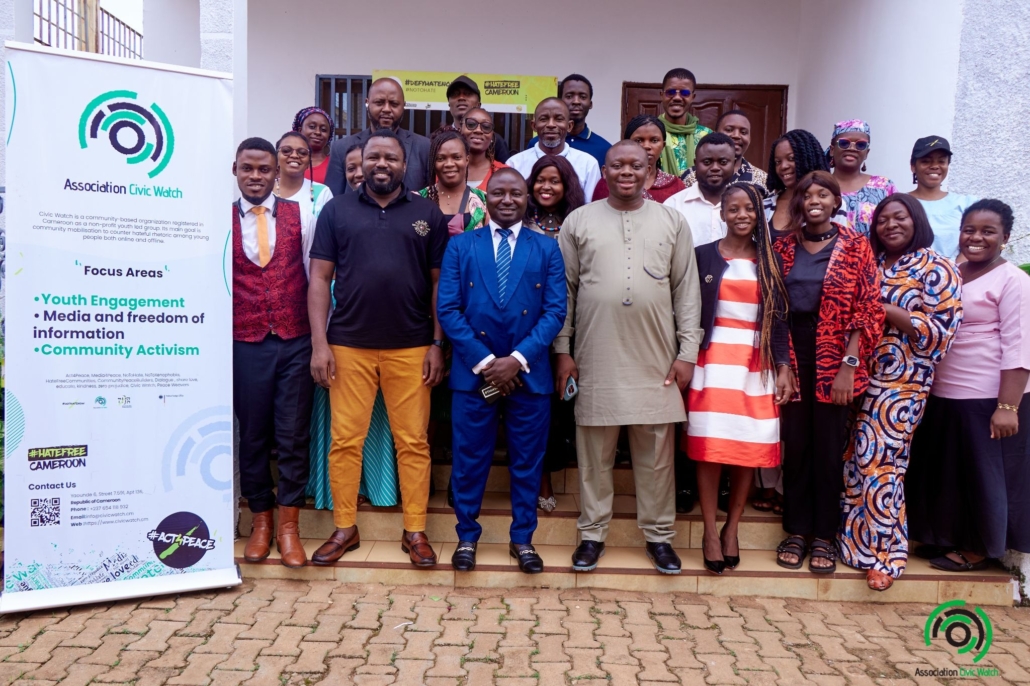
In a time when press freedom faces mounting pressure and digital threats continue to evolve, investing in journalists is ultimately an investment in democracy itself. Through knowledge, ethical practice, and collective action, Civic Watch is helping build a future where technology serves the public interest, human rights are protected, and journalists can carry out their essential role safely, independently, and with integrity.


This is a stitch in time. Thank you Civic watch for updating the skills of journalists in documenting human rights especially as our rights are violated on daily basis. There are times we do not even know when our rights are violated or how to document them but this workshop drew the line between what constitutes a rights violation and how to document them in our communities.