
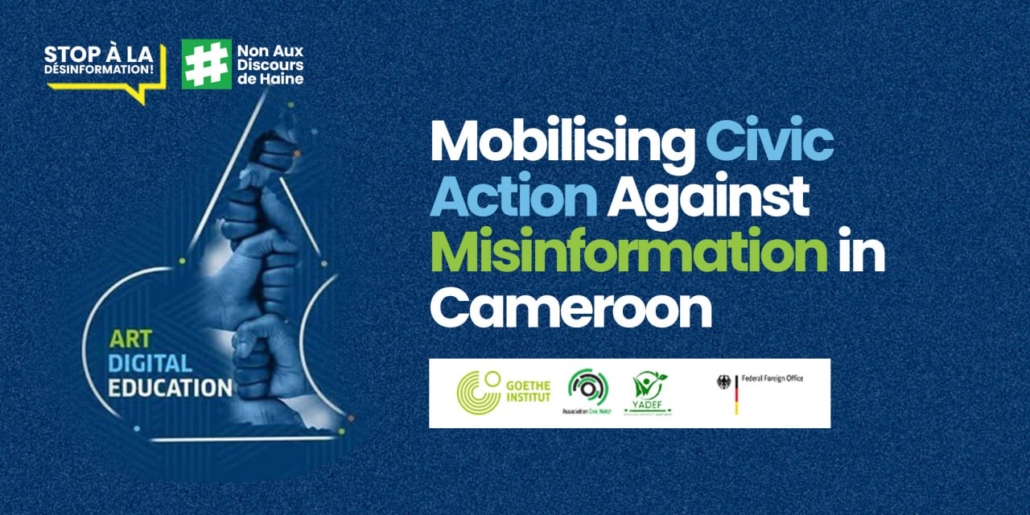
Mobilising Civic Action Against Misinformation in Cameroon
By MBEHNI Drusilla NANGE (Volunteer at Civic Watch)
In Cameroon today, misinformation and hate speech are no longer distant problems that people can ignore, as they are shaping how individuals think, how communities interact, and in some cases, how tensions grow. In regions already dealing with social and political pressure, the spread of false or harmful information can quietly break trust and weaken the bonds that hold communities together. This growing challenge is what Civic Watch, coordinated by Kanda Honourine, in partnership with the Youth Actions for Development Foundation (YADEF), by Ebong Lovert, is working to address.
Through the project “Mobilising Civic Action to Counter Misinformation and Hate Online and Offline in Cameroon,” a new and practical approach is being introduced to help communities better understand information and engage with one another more responsibly. Supported by the Goethe-Institut Kamerun and the German Foreign Ministary under the Connected Camero(o/u)n initiative, the project brings together civil society actors who share a common goal of building stronger, more informed, and more connected communities.
At the center of this initiative is a clear idea that access to the right skills can make a real difference. When people are able to question what they see, verify information, and think carefully before sharing, they are less likely to fall for false narratives and more likely to contribute positively to society. However, these skills are not equally available to everyone, especially young people who are very active online but often lack structured guidance on how to navigate digital spaces safely and responsibly.
To respond to this need, the project will carry out a series of activities in the North West and South West regions, focusing on media literacy and digital safety. Through interactive workshops, young people will learn how to identify false information, understand online risks, and communicate in ways that are respectful and responsible. These sessions are designed not only to inform but also to empower participants with practical skills they can use every day.
Beyond training, the project also creates space for open and honest conversations, recognizing that dialogue is essential in addressing misinformation. Community forums and intercultural exchanges will bring people together to share experiences, discuss common challenges, and better understand different perspectives. In environments where misinformation often spreads because of fear or misunderstanding, these conversations can play a key role in rebuilding trust.
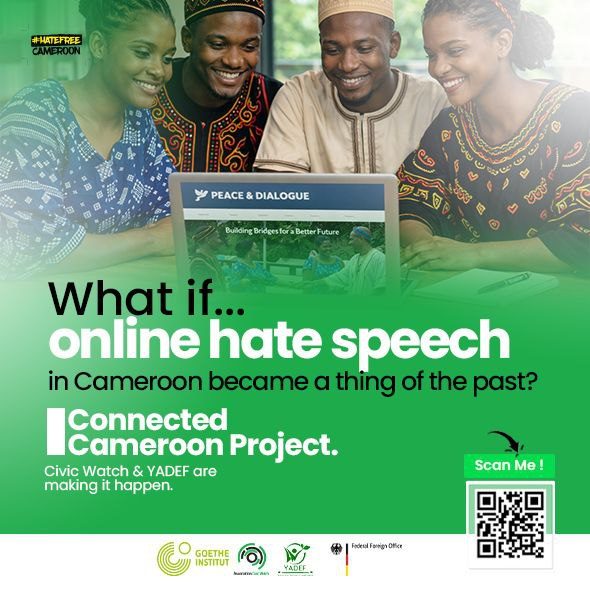
The initiative also includes the development of an early warning and response system that will help communities identify and track harmful narratives as they emerge. This makes it possible to respond quickly and in a coordinated way, reducing the impact of misinformation before it spreads widely. Alongside this, civic campaigns will encourage responsible information sharing, helping individuals move from awareness to action in their daily lives.
A strong focus is also placed on inclusion, ensuring that women and marginalized groups are not left out of the conversation. These groups are often excluded from both digital and civic spaces, so the project provides targeted support and safe environments that allow them to participate fully. Building inclusive spaces is essential for creating communities that are not only informed but also fair and representative.
The impact of this work is expected to go beyond the immediate activities, as individuals who gain these skills can influence others in their communities. Over time, this can lead to stronger local networks, better responses to misinformation, and a gradual rebuilding of trust where it has been lost.
This initiative is part of the wider Connected Camero(o/u)n project, which promotes collaboration, innovation, and knowledge sharing among organizations across the country. By supporting partnerships like that of Civic Watch and YADEF, it highlights the importance of working together to address complex challenges.
As information continues to spread quickly, especially online, the ability to understand and engage with it responsibly has become a key part of active citizenship. Efforts like this show that countering misinformation is not only about correcting false information, but also about strengthening people, supporting communities, and building systems that can stand strong in the face of growing challenges.


Leave a Reply
Want to join the discussion?Feel free to contribute!